Sugar Free Vs Regular Peanut Butter: Which Is Better?
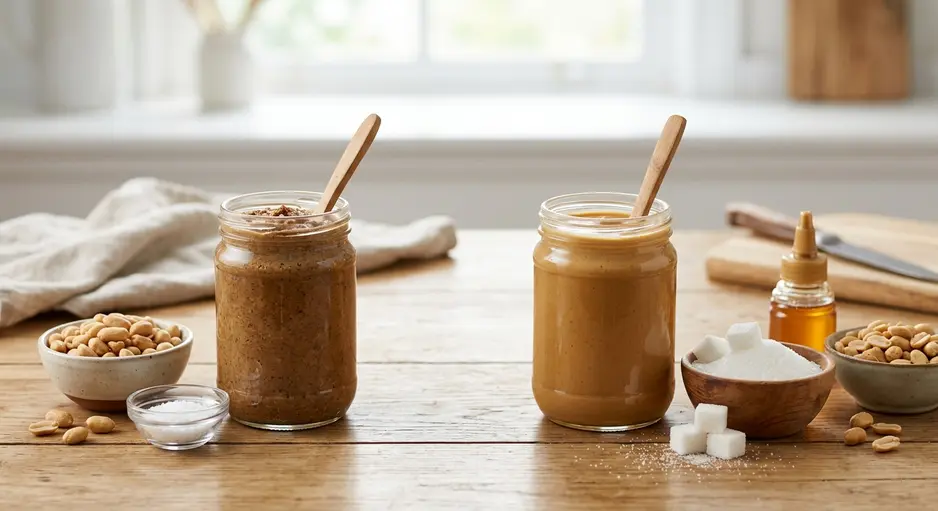
Two jars of peanut butter can look almost the same but have very different labels. One may contain added sugar, salt, and stabilizing oils. Another may use only peanuts. A third may be a sugar-free peanut spread made with alternative sweeteners.
So, which is better? The answer depends on the ingredients, serving size, total carbohydrates, and your health goals. A sugar-free label does not always mean fewer calories or a simpler product. Likewise, regular peanut butter is not always high in sugar.
This sugar free vs regular peanut butter comparison explains what to check before choosing. Nutrition values vary by product, so always confirm the details on the package.
What Is the Difference Between Sugar-Free and Regular Peanut Butter?
What “sugar free” means on a label
Under FDA labeling guidance, a food labeled “sugar free” must contain less than 0.5 grams of sugar per labeled serving. However, this claim does not mean the product is calorie free, carbohydrate free, or minimally processed.
Other common label terms have different meanings:
- No added sugar: No sugar or sugar-containing ingredient was added during processing. Small amounts of naturally occurring sugar may remain.
- Unsweetened: The product is made without ingredients added for sweetness, but shoppers should still review the complete label.
- Reduced sugar: The product generally has at least 25% less sugar than an appropriate reference food.
- Sugar free: The food meets the regulated threshold per labeled serving.
Peanuts contain a small amount of natural peanut sweetness. That is why “no added sugar” and “sugar free” are not interchangeable. Check both “Total Sugars” and “Includes Added Sugars” on the nutrition panel.
What is regular peanut butter?
Regular peanut butter is a conventional product that may include roasted peanut ingredients, sugar, molasses, salt, and stabilizing oils. Recipes differ by brand. Some contain only a modest amount of added sugar, while others have a sweeter flavor.
In the United States, the FDA standard of identity requires products sold as peanut butter to contain at least 90% peanuts. Products with a different peanut percentage or formulation may be called peanut spread.
How Does Sugar-Free vs Regular Peanut Butter Nutrition Compare?
Exact peanut butter nutrition depends on the recipe. According to typical product labels and entries in USDA FoodData Central, a two-tablespoon serving often falls within the following ranges.
Representative nutrition per two tablespoons
- Calories: About 180–200 for either type
- Protein content: About 7–8 grams
- Total fat: About 15–17 grams
- Carbohydrate content: About 6–8 grams for many unsweetened options and 7–9 grams for many sweetened products
- Added sugar content: Often 0 grams in unsweetened products and around 1–3 grams in sweetened versions
- Sodium levels: Highly variable, depending on added salt
These are broad ranges, not values for every product. Compare jars using the same serving size and verify the figures on each package.
Does removing sugar reduce calories?
Not by much in many cases. Most of peanut butter’s calorie profile comes from fat rather than sugar. A sugar-free formulation may also contain added fats, bulking ingredients, or sweetener alternatives. As a result, two products with different sugar levels can have almost the same calories.
Serving size often makes a bigger difference. Two level tablespoons can turn into three or four when peanut butter is spread without measuring.
Protein, fats, sodium, and oils
Both varieties usually provide similar protein because peanuts are the main source. They also contain a healthy fat profile made up largely of unsaturated fats. The American Heart Association recommends choosing unsaturated fats in place of saturated and trans fats when possible.
Do not focus on sugar alone. Compare sodium levels, hydrogenated oil content, stabilizers, and preservative content. “Natural” or “sugar free” does not automatically mean low sodium or free from added oils.
Benefits and Drawbacks of Each Type

Sugar-free peanut butter benefits
- It can help reduce added sugar intake.
- It fits many low-sugar eating patterns.
- It may have a stronger roasted peanut flavor.
- An unsweetened version may have a short ingredient list.
- It works well in sauces, curries, and other savory recipes.
The Dietary Guidelines for Americans advise limiting added sugar to less than 10% of daily calories. Choosing low sugar peanut butter can support that goal, especially if several other foods in your diet are sweetened.
Possible drawbacks
Some sugar-free peanut butter products use stevia, monk fruit, sucralose, or sugar alcohols. These ingredients may leave an aftertaste. Sugar alcohols, including erythritol, can also cause gas or digestive discomfort in some people.
A sugar-free claim may create a health halo. The product can still be high in calories, salt, or added oil. It may also contain more ingredients than a basic jar made from peanuts and salt.
Regular peanut butter benefits and drawbacks
Regular peanut butter often has a familiar texture and taste. Added sugar rounds out roasted flavors, while stabilizers keep the product smooth and shelf-stable. It is convenient, widely available, and easy to use in sandwiches or snacks.
Its main drawback is that added sugar can build up across the day. Some products also contain more sodium or oils than expected. Still, modestly sweetened peanut butter can be a nutritious choice when the portion and overall diet are balanced.
Which Peanut Butter Is Better for Your Health Goal?
Best peanut butter for low-sugar diets
Choose an unsweetened or no-added-sugar option with a short ingredient list, such as peanuts with optional salt. Compare total carbohydrates as well as added sugar. An unsweetened product may be a better fit than an artificially sweetened spread if you prefer simple ingredients.
Is sugar-free peanut butter better for diabetes?
It may help limit added sugar, but the front-label claim is only one factor. Total carbohydrates, portion size, the rest of the meal, and individual blood glucose response all matter.
Peanut butter can be paired with fiber-rich foods such as an apple, unsweetened oatmeal, or whole-grain toast. The American Diabetes Association encourages individualized nutrition planning. People managing diabetes should follow advice from a qualified healthcare professional.
Which type is better for weight loss?
Neither type guarantees weight loss. Sugar-free and regular versions can have nearly identical calories. Because peanut butter is energy-dense, portion control is often more important than a small difference in sugar.
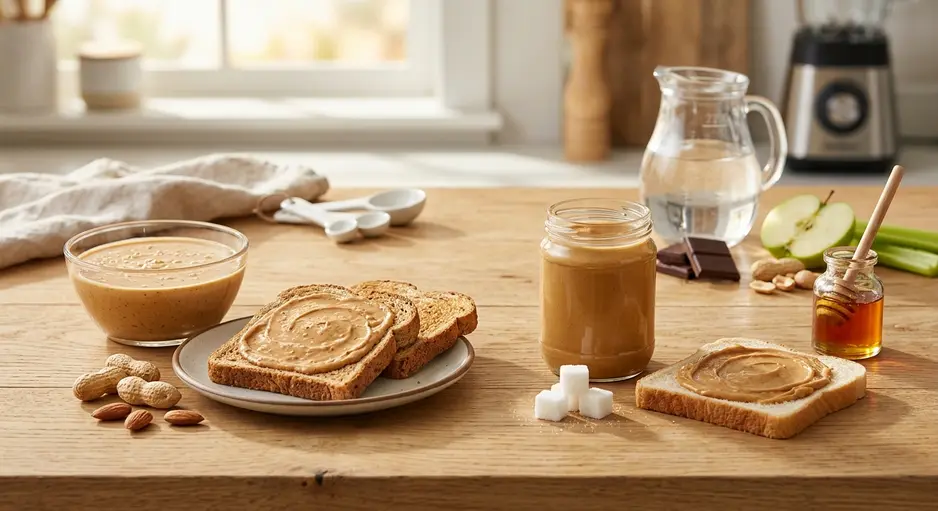
Measure two tablespoons instead of eating from the jar. Pair the portion with fruit or whole grains rather than sweetened crackers or desserts. This makes the serving easier to track and can create a more balanced snack.
Which option suits athletes?
Regular peanut butter can suit active adults when a small amount of added sugar is not a concern. Unsweetened peanut butter also works well when carbohydrates come from oats, fruit, or whole grains.
Peanut butter supplies energy, fats, and some protein. However, it should not be treated as a complete recovery food on its own. Post-workout needs vary with the activity, duration, and person.
What about children and families?
Choose an age-appropriate texture and a straightforward ingredient list. Consider serving size, sodium, and the use of alternative sweeteners. Caregivers should follow pediatric guidance when introducing peanut products.
Allergy warning: Peanut products are not safe for anyone with a peanut allergy. Avoid cross-contact and follow medical advice where allergies are a concern.
How Ingredients Affect Taste, Texture, and Quality
Added sugar and peanut flavor
Sugar can soften bitter roasted notes and create a dessert-like taste. Unsweetened products tend to taste richer, nuttier, and less sweet. Neither flavor is automatically better; the right choice depends on dietary preferences and intended use.
Why does natural peanut butter separate?
Oil separation is common when a product is made mainly from peanuts without stabilizers. It is not necessarily a sign of poor quality. Stir the jar well before use, then store it according to the manufacturer’s instructions. Refrigeration may slow separation, though it can make the texture firmer.
Stabilized sweetened peanut butter usually stays smooth and easy to spread. Check the label if you wish to avoid fully or partially hydrogenated oils.
How each type performs in food
- Sandwiches: Regular peanut butter may provide a sweeter, smoother result.
- Sauces and curries: Unsweetened products prevent unwanted sweetness.
- Smoothies: Either type works, but account for sugar from fruit or flavored protein powder.
- Baking: Changes in sugar and fat can affect browning, moisture, and texture.
How to Choose the Best Peanut Butter at the Store
A five-step label checklist
- Confirm the serving size. Do not compare nutrition values based on different portions.
- Check added sugar. Read both total sugars and included added sugars.
- Review the ingredients. Look at the peanut content and the order of all ingredients.
- Compare sodium and oils. A low-sugar product may still be high in salt or contain added fats.
- Consider how you will use it. Taste, texture, price, storage, and recipe needs are all practical factors.
Common label-reading mistakes
- Assuming “natural” means sugar free
- Believing sugar free means calorie free
- Ignoring total carbohydrate content
- Comparing different serving sizes
- Rejecting every regular product because it has a small amount of sugar
- Overlooking sugar alcohols or other alternative sweeteners
A practical buying rule
Choose unsweetened or no-added-sugar peanut butter if reducing added sugar and enjoying a strong peanut taste are your priorities. Choose regular peanut butter if its ingredients suit your needs and the added sugar is modest.
Before buying a sugar-free peanut spread, review its sweeteners, oils, sodium, and possible digestive effects. Look for clear nutrition facts, allergen details, ingredient traceability, and relevant food-safety information.
Businesses and buyers seeking information about peanut-based food products can explore Nutrionex Foods and contact the company for current product details.
Explore Sugar Free & Regular Peanut Butter
Final Verdict
In the sugar free vs regular peanut butter debate, an unsweetened or no-added-sugar product is generally better for minimizing added sugar. Yet a sugar-free claim alone does not guarantee fewer calories, better oils, or a shorter ingredient list.
Regular peanut butter can still fit a nutritious diet when its added sugar is modest and the serving is controlled. Focus on three points: added sugar, ingredient quality, and portion size. The best jar is the one whose complete label matches your health needs, taste, and everyday eating habits.
Frequently Asked Questions
1. Is sugar-free peanut butter healthier than regular peanut butter?
It can help lower added sugar intake, but it is not always healthier. Calories, serving size, sodium, oils, alternative sweeteners, and the rest of your diet also matter. Compare the full nutrition panel rather than relying on one front-label claim.
2. Does regular peanut butter have a lot of sugar?
It depends on the recipe. Many regular products contain only a few grams of total sugar per serving, including natural and added sugars. Others are much sweeter. Check the “Includes Added Sugars” line for an accurate comparison.
3. Is no-added-sugar peanut butter the same as sugar free?
No. “No added sugar” means sugar was not added during processing. Naturally occurring sugar may still be present. “Sugar free” is a regulated claim that requires the product to contain less than 0.5 grams of sugar per labeled serving.
4. Can people with diabetes eat regular peanut butter?
Often, yes. Suitability depends on the amount eaten, total carbohydrates, other ingredients, and the individual eating plan. A modestly sweetened option may fit some plans, but personal medical and nutrition guidance should take priority.
5. Does sugar-free peanut butter help with weight loss?
Not automatically. Most calories in peanut butter come from fat, so removing sugar may produce only a small calorie difference. Measuring the serving and considering the foods eaten with it are more useful steps for weight management.