Natural Peanut Butter Exporter & Supplier In Saudi Arabia
Saudi buyers are showing greater interest in simple, clean-label foods that fit modern retail, foodservice, and nutrition needs. Natural peanut butter meets this demand with its rich taste, flexible use, and minimal ingredient formulation.
Importers, distributors, retailers, cafés, bakeries, and private-label brands need more than a good product. They must review ingredients, texture, food safety, packaging, shelf life, labeling, and shipping needs. Businesses looking for a natural peanut butter supplier in Saudi Arabia can contact Nutrionex Foods to discuss current specifications and export options.
Why Saudi Buyers Choose Natural Peanut Butter
What Is Natural Peanut Butter?
Natural peanut butter is usually made with a short and clear ingredient list. A basic product may contain 100% roasted peanuts. Other versions may include a limited amount of salt. Buyers can also request no added sugar or low sodium options, subject to the available formulation.
A natural peanut spread often avoids hydrogenated oils, artificial preservatives, and unnecessary additives. This makes it different from conventional spreads that may contain added fats, sweeteners, or stabilizers.
The exact formulation should always be checked through an ingredient list and product specification. Terms such as pure peanut butter or premium peanut butter should not replace documented product details.
Is Natural Peanut Butter in Demand in Saudi Arabia?
Natural peanut butter can serve several growing food categories in Saudi Arabia. It works as a breakfast spread, snack ingredient, smoothie addition, baking input, or foodservice product. It may also appeal to consumers who prefer simple ingredient lists.
Retail stores can position it within regular grocery, health-food, fitness, or premium-food ranges. Cafés may use it in drinks and desserts, while bakeries can add it to fillings, cookies, cakes, and sauces.
Actual demand will differ by price point, pack size, location, and target customer. A controlled launch can help buyers understand local preferences before placing larger orders.
Protein, Healthy Fats and Everyday Use
Peanuts naturally provide protein and unsaturated fats. However, the final protein content and nutrition values depend on the formulation and serving size. Buyers should review the nutrition specification before making any product claim.
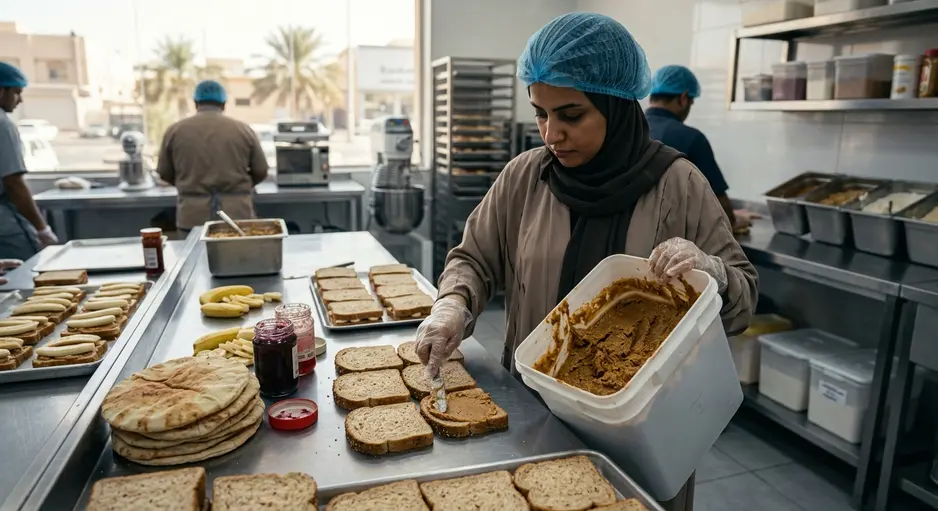
Peanut butter is also easy to use. Consumers can spread it on bread, blend it into smoothies, or add it to oatmeal. Food businesses can use it in baked goods, sauces, snacks, and desserts.
What Makes Peanut Butter Export-Ready?
Roasted Peanuts and Minimal Ingredients
An export-ready product should offer consistent taste, aroma, color, and texture across batches. Controlled roasting helps develop peanut flavor, while suitable grinding creates the required mouthfeel.
Saudi buyers may ask for:
- Products made with 100% roasted peanuts
- Salted, unsalted, or low sodium options
- No added sugar formulations
- No hydrogenated oils
- No artificial preservatives
- Fine or coarse grinding
- Consistent flavor and viscosity
Every requirement should appear in an approved specification. Buyers should not rely only on front-label statements when comparing products.
Smooth Texture or Crunchy Texture?
A smooth texture works well for sandwiches, sauces, smoothies, desserts, and many institutional uses. It is also easy to portion and mix with other ingredients.
Crunchy texture includes small peanut pieces and gives consumers a more noticeable bite. It may suit retail ranges aimed at shoppers who want extra texture.
Samples should be tested for grind size, flavor, spreadability, viscosity, mouthfeel, and oil separation. Foodservice and industrial buyers should also test the product in their own recipes before approval.
Why Does Natural Peanut Butter Separate?
Oil separation is common in products that do not use stabilizers. Natural peanut oil may rise to the surface while the peanut solids settle below. This does not automatically mean the product has a quality problem.
Stirring can restore a more even consistency. Storage and handling directions must follow the manufacturer’s validated specification, as the right approach can vary by recipe and packaging.
Retail, Bulk and Private-Label Supply Options
Natural Peanut Butter for Retailers in Saudi Arabia
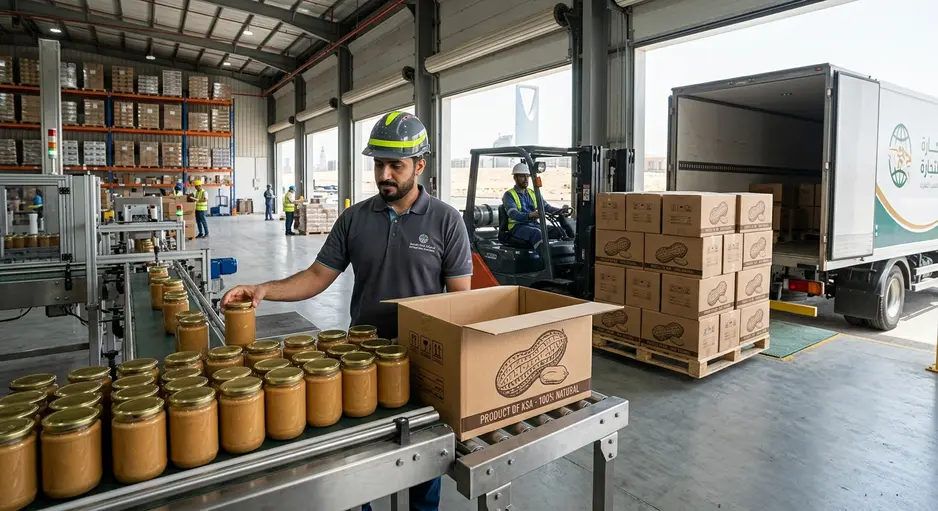
Retail packaging should be easy to handle, store, display, and ship. Buyers should discuss food-grade jars, tamper-evident seals, secure lids, shelf-ready cartons, and clear batch coding.
A business sourcing natural peanut butter for retailers in Saudi Arabia should also consider jar size, carton quantity, barcode needs, and e-commerce delivery. Glass and food-grade plastic can both be considered, depending on product needs and confirmed supplier options.
Labels should be reviewed before printing. Arabic or approved bilingual information may be needed for the Saudi market.
Bulk Supply for Foodservice Businesses
A bulk natural peanut butter supplier for Saudi Arabia may serve bakeries, cafés, hotels, caterers, institutional kitchens, and food processors. These buyers often focus on consistency, ease of dispensing, and performance in recipes.
Available bulk formats must be confirmed directly with the supplier. Buyers should assess package weight, seal strength, storage space, handling needs, and how quickly the product will be used after opening.
Private-Label Peanut Butter for Saudi Brands
Private labeling allows a Saudi business to sell peanut butter under its own brand. The process may involve formula selection, sample approval, label development, packaging review, and commercial production.
When evaluating a private label peanut butter supplier in Saudi Arabia, buyers should ask about:
- Smooth and crunchy choices
- Available ingredient formulations
- Jar and carton options
- Minimum order quantity
- Artwork and label approval
- Barcode and batch-code requirements
- Production and dispatch lead times
Private-label capabilities differ between suppliers. Every detail should be confirmed before a purchase agreement is signed.
Saudi Food Safety and Import Requirements
What Should Appear on a Saudi Peanut Butter Label?
The Saudi importer should verify current food registration and labeling requirements before shipment. Requirements can change and may depend on the recipe, pack type, importer status, and sales channel.
Information that may need review includes:
- Product name and ingredient list
- Clear peanut allergen declaration
- Net quantity
- Nutrition information
- Country of origin
- Manufacturer and importer details
- Production and expiry dates
- Batch or lot identification
- Storage and usage instructions
- Arabic or approved bilingual information
The importer should complete a final compliance check with the relevant Saudi authorities or an experienced customs and food-compliance professional.
Allergen and Aflatoxin Management
Peanuts are a major food allergen. Good allergen management may include controlled storage, production planning, sanitation, traceability, label checks, and staff procedures. Buyers should request clear information about the controls used for their product.
Aflatoxin management is also important when sourcing peanut products. Buyers can ask for recent test reports, certificates of analysis, and details about raw-material checks. Microbiological controls should also be reviewed because low-moisture foods still require suitable food safety management.
Which Food Safety Certifications Matter?
Customers may request systems or certifications such as HACCP, GMP, ISO 22000, FSSC 22000, BRCGS, or Halal certification. The right requirement depends on the Saudi buyer, retail channel, product, and applicable import rules.
Organic peanut butter should only be marketed as organic when supported by valid certification for the product and target market. Buyers should request current certificates and verify their scope, issuing body, and expiry date.
Common Export Documents
Documents may include a commercial invoice, packing list, certificate of origin, product specification, certificate of analysis, and transport document. Health, insurance, or conformity documents may also apply in some cases.
Not every document is required for every shipment. The Saudi importer and exporter should confirm the final list before production and dispatch.
How to Choose a Peanut Butter Exporter
Supplier Evaluation Checklist for Saudi Buyers
Choosing a natural peanut butter exporter from India to Saudi Arabia requires a review of both product quality and export support. Price is important, but it should not be the only factor.
- Confirm the complete ingredient formulation.
- Request a current product specification.
- Review verified food safety certificates.
- Ask for aflatoxin and microbiological reports.
- Test flavor, texture, spreadability, and oil separation.
- Review allergen controls and traceability.
- Check product-specific shelf-life evidence.
- Assess sealing, tamper evidence, and carton strength.
- Confirm MOQ, capacity, and production lead time.
- Verify label compatibility and export documentation.
What Should Buyers Ask Before Ordering?
Buyers should ask which formulations, retail packs, and bulk formats are currently available. They should also discuss sample costs, trial quantities, private-label support, Incoterms, lead times, and shipping arrangements for Jeddah or Dammam.
Other useful questions cover remaining shelf life on arrival, complaint handling, recall procedures, batch traceability, and support for document preparation. Clear written answers reduce the risk of delays or product disputes.
Evaluating Nutrionex Foods
Saudi buyers considering Nutrionex Foods can request its current product catalogue, ingredient details, nutrition specifications, packaging formats, and available samples. They should also ask for verified certifications, testing documents, MOQ information, quotations, and details of any labeling support.
This document-led approach helps buyers assess Nutrionex Foods without relying on assumptions or unsupported marketing claims.
Shelf Life, Packaging and Shipping
How Long Does Natural Peanut Butter Last?
Shelf life depends on ingredients, processing, oxygen exposure, packaging, and storage. A general estimate should not replace product-specific stability data.
Saudi buyers should confirm the declared shelf life and the minimum period that will remain when the shipment arrives. Retailers and distributors may set their own minimum requirements to allow enough time for customs clearance, distribution, and sale.
Packaging That Protects Product Quality
Suitable packaging helps reduce leaks, contamination, oxidation, and physical damage. Important features include food-grade materials, airtight sealing, tamper evidence, strong closures, and clear batch coding.
Export cartons should be strong enough for stacking and transport. Pallet layout, carton count, total weight, and traceability information should be agreed before dispatch.
Shipping in Saudi Arabia’s Climate
High temperatures during transit and storage may affect product texture and oil movement. Exporters and buyers should review validated storage data rather than assume that one shipping method suits every formulation.
Planning should cover loading, port transit, warehouse conditions, and last-mile delivery. Temperature controls should be used when product data or shipping conditions show they are needed.
Practical Sourcing Examples

Private-Label Retail Launch
Consider a Saudi healthy food retailer seeking smooth peanut butter with no added sugar. The retailer first requests samples, ingredient details, shelf-life evidence, label review, and carton specifications.
A limited trial order allows the business to assess delivery condition and customer response. Sales, returns, and feedback can then guide the next order.
Foodservice and Bakery Supply
A bakery chain may need a bulk product with consistent viscosity. Its team can test mixing, baking performance, flavor, and spreadability before approving the specification.
Once approved, the buyer and supplier can agree on batch controls, packaging, order frequency, lead time, and stock reorder points.
Natural Peanut Butter Exporter in Saudi Arabia
Source Natural Peanut Butter for Saudi Arabia
A reliable sourcing decision should balance taste, formulation, food safety, shelf-life stability, packaging, compliance, and export service. Saudi buyers should select a supplier based on documented capability rather than price alone.
Importers, distributors, retailers, foodservice operators, and private-label brands can contact Nutrionex Foods to request current product specifications, packaging options, verified certifications, samples, MOQ details, and an export quotation. This allows each buyer to assess whether the company is a suitable natural peanut butter supplier for Saudi buyers.
Frequently Asked Questions
1. Can I Import Natural Peanut Butter From India?
Importing may be possible when current Saudi registration, labeling, customs, and documentation requirements are met. The licensed importer should verify the latest rules before confirming production or shipment.
2. Is Natural Peanut Butter Made Without Added Sugar?
It can be made without added sugar. Buyers should check the full ingredient list and nutrition specification rather than rely only on wording on the front of the jar.
3. Can a Supplier Produce Private-Label Peanut Butter?
Private-label services depend on the supplier’s current capabilities. Confirm formulation choices, packaging, MOQ, artwork approval, lead time, testing, and regulatory support before placing an order.
4. Does Natural Peanut Butter Need Refrigeration?
Storage depends on the formulation and packaging. Follow the validated instructions supplied with the product. Do not apply one storage method to every type of peanut butter.
5. What Is the Best Packaging for Bulk Peanut Butter?
The right package depends on usage volume, dispensing needs, transport conditions, storage space, and food safety procedures. Buyers should test the proposed format in their operation before making a large commitment.