Why Protein Bar Brands Need Reliable Peanut Butter Supplier
Inconsistent peanut butter can change bar texture, slow production, reduce shelf life, or lead to rejected batches. For a protein bar brand, peanut butter is not just a flavor. It can affect binding, mouthfeel, nutrition, equipment flow, and product stability.
Choosing the right peanut butter supplier for protein bar brands requires more than comparing prices. Buyers must review technical specifications, food safety controls, packaging, lead times, and batch consistency. A lower price per kilogram may create higher costs if the ingredient causes downtime, reformulation, waste, or customer complaints.
Why Does the Peanut Butter Supplier Matter?
Peanut Butter Affects More Than Flavor
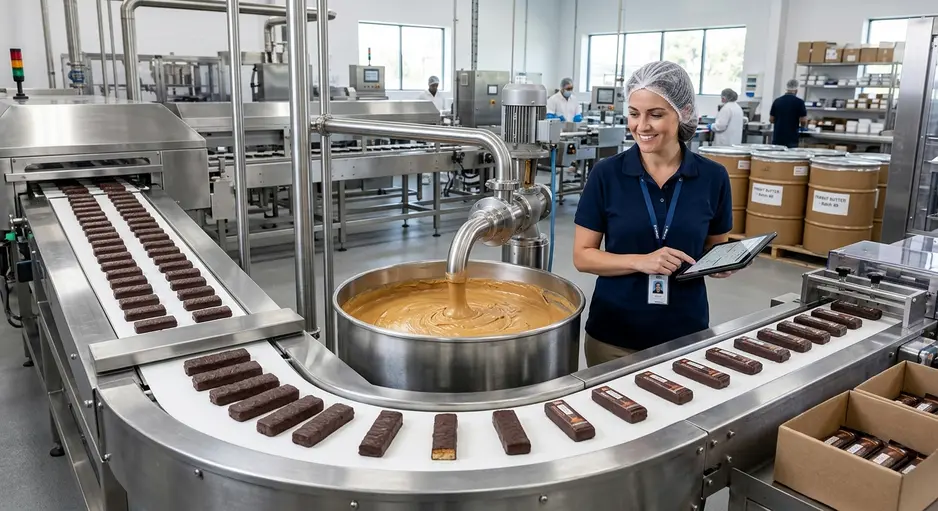
Protein bar peanut butter often helps bind dry ingredients such as protein powders, oats, fibers, and inclusions. It also adds fat, protein, energy density, roasted flavor, and a familiar texture. The right formula can support a softer chew, while the wrong one may produce a hard, greasy, or crumbly bar.
Its flow properties also affect mixing, pumping, depositing, and forming. For this reason, peanut butter for energy bars must be tested as a functional ingredient rather than judged by taste alone.
Standard peanut butter is naturally a source of protein. However, brands that want to make a “high protein” claim must confirm the nutritional value of the finished bar and follow the labeling rules in each target market.
Small Variations Can Cause Large Problems
Changes in peanut butter viscosity, particle size, oil separation, moisture, roast level, or oxidation can affect the whole production process. They may alter binder ratios, bar hardness, equipment flow, flavor, and shelf life stability.
For example, a lot that is thinner than the approved sample may make the mixture sticky and difficult to cut. A thicker lot may require longer mixing or more binder. Both situations cost time and increase the risk of uneven batches.
Peanut Butter Quality Specifications for Protein Bars
Clean-Label and Nutritional Requirements
Brands can choose from natural peanut butter, creamy peanut butter, roasted peanut paste, stabilized formulas, and no added sugar peanut butter. Some products may also combine peanut butter with peanut flour or protein to create high protein peanut butter formulations.
Natural formulas can support a short, recognizable ingredient list. However, they may show more oil separation. Stabilized formulas can improve processing and storage performance, but the added ingredients must fit the brand’s clean-label goals.
A clean label peanut butter should still meet clear technical limits. A simple ingredient statement does not replace food safety testing, shelf-life work, or production trials.
Technical Specifications to Define
Before approving bulk peanut butter for food processing, the buyer and supplier should agree on measurable peanut butter quality specifications. These may include:
- Viscosity at a stated temperature and with a defined test method
- Particle size, smoothness, and mouthfeel
- Roast profile, color, aroma, and flavor
- Protein, fat, moisture, and water activity
- Oil-separation limits
- Peroxide value or other oxidation indicators
- Microbiological and contaminant limits
- Aflatoxin limits for the destination market
- Foreign-material controls
- Shelf life and recommended storage conditions
Viscosity values are useful only when the test conditions are consistent. Temperature, spindle, speed, sample preparation, and test time should be recorded. Results from different methods may not be directly comparable.
Food Safety and Allergen Documents
Peanuts are a major food allergen. A reliable supplier should provide the documents needed for the buyer’s hazard analysis and label review. These commonly include:
- A certificate of analysis for each lot
- A product specification sheet
- An allergen statement
- Ingredient and nutritional declarations
- Country-of-origin information
- Traceability and recall procedures
- Relevant microbiological and contaminant reports
- Food-contact packaging declarations
Low water activity does not remove all microbial risk. FDA guidance notes that pathogens such as Salmonella can survive in low-moisture foods. Supplier preventive controls, sanitation, testing, and traceability therefore remain important.
What Makes a Peanut Butter Supplier Reliable?
Consistent Product Quality Between Batches
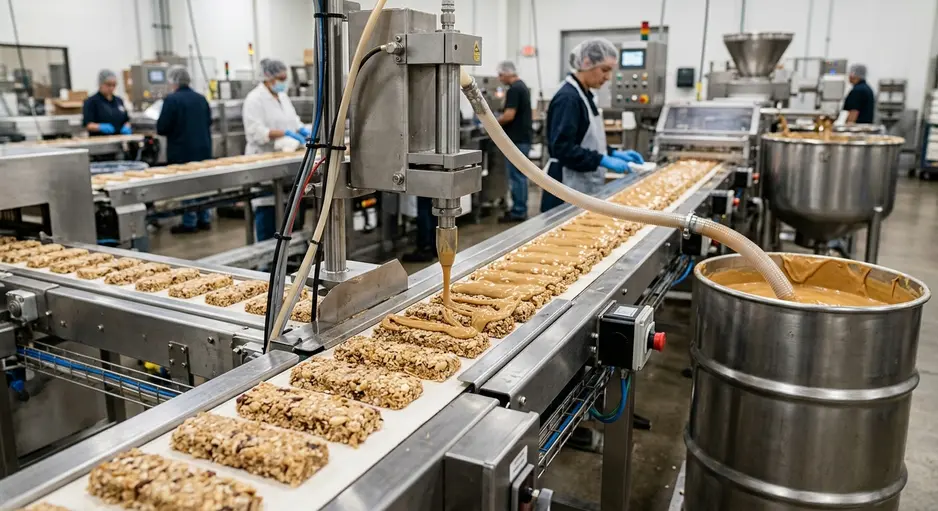
A dependable peanut butter manufacturer should use approved raw material sources, controlled roasting and grinding, in-process checks, and lot-release procedures. Retained samples can also help investigate complaints or unexpected changes.
Ask whether the supplier has a written change-control process. Buyers should receive notice before changes are made to raw materials, production sites, processes, formulas, or packaging. Even a minor change may affect bar performance.
Reliable Bulk Food Ingredient Supply
A reliable peanut butter supplier for protein bars should offer realistic order quantities, confirmed lead times, and clear production planning. Procurement teams should also discuss forecast sharing, safety stock, backup sourcing, and the process for handling nonconforming deliveries.
Supply capacity should match both current demand and expected growth. A startup may value flexible minimum orders, while a mature brand may need repeatable monthly shipments and formal contingency plans.
Packaging for Food Manufacturing
Common customized packaging solutions may include food-grade pails, lined drums, totes, and tamper-evident containers. The right format depends on volume, handling equipment, storage space, and production speed.
Packaging should protect the product from contamination, leakage, oxidation, and excess heat during storage and transportation. Buyers should also confirm lot coding and the amount of shelf life remaining at delivery.
How Do You Choose a Peanut Butter Supplier?
1. Create a Supplier Requirements Brief
Start with a written brief that covers monthly and annual volume, formulation, target nutrition, viscosity range, shelf-life goal, packaging, delivery point, and export needs. Include required food manufacturing standards and documents.
2. Review Food Safety Controls
Ask whether the facility follows Good Manufacturing Practices and HACCP-based controls. Review allergen management, traceability, sanitation, product testing, local licenses, and applicable certifications.
Frameworks such as the FDA Food Safety Modernization Act and Codex General Principles of Food Hygiene provide useful reference points. Some buyers may also request a GFSI-recognized scheme, such as BRCGS, SQF, or FSSC 22000. Certification supports due diligence, but it does not prove that an ingredient will work in a specific bar.
3. Request Samples and Run Production Trials
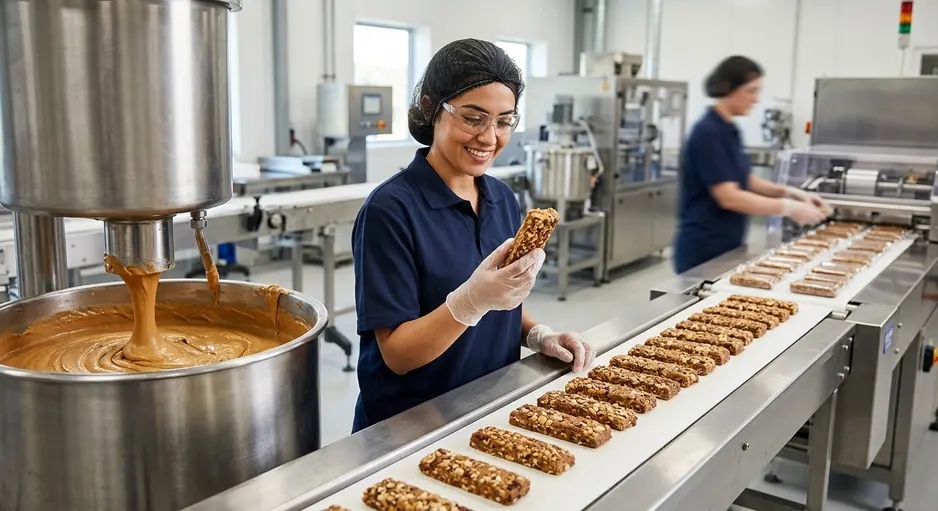
Do not approve premium peanut butter based only on a spoon test. Use it in the actual formula and, where possible, on the intended equipment. Assess mixing time, flow, depositing, forming, cutting, immediate texture, oil migration, and flavor.
Run real-time and suitable accelerated shelf-life studies. The complete bar can behave differently from the ingredient because proteins, fibers, sweeteners, oils, and coatings interact over time.
4. Audit Commercial and Supply Capabilities
Review minimum order quantities, price breaks, lead time, available capacity, payment terms, shipping responsibility, complaint response, recall readiness, and export paperwork. These details can reveal risks that are not visible in a product sample.
5. Use a Weighted Supplier Scorecard
A simple scorecard makes supplier comparisons more objective. One practical model is:
- Food safety and compliance: 30%
- Technical fit and consistency: 25%
- Supply reliability: 20%
- Commercial terms: 15%
- Service and innovation support: 10%
Adjust the weighting to match your risks. A new brand may place more value on technical help, while a high-volume producer may give greater weight to continuity and logistics.
Manufacturer, Exporter, or Private-Label Partner?
Manufacturer for Nutrition Brands
Working directly with a peanut butter manufacturer for nutrition brands may be useful when a company needs a defined roast profile, controlled viscosity, pilot samples, a specific ingredient declaration, or long-term volume planning.
A peanut butter supplier for sports nutrition may also need tighter control over macros, sweetness, texture, and ingredient claims. These points should be documented rather than assumed.
Food-Grade Exporter
A food-grade peanut butter exporter should understand destination-country labeling, allergen, contaminant, and import rules. Buyers may need certificates of origin, health documents, shipment records, agreed Incoterms, and proof of suitable shelf life on arrival.
Requirements vary by market. Importers should check current local regulations and ensure that contract terms identify who is responsible for each document.
Private-Label Supplier
A private label peanut butter supplier may be suitable for brands selling finished jars or consumer packs. In contrast, peanut butter for protein bar manufacturing often needs industrial packaging, technical data, repeat delivery schedules, and processing support. The two supply models should not be treated as identical.
A Practical Sourcing Strategy for Protein Bar Brands
Approve the Ingredient in Three Stages
- Documentation review: Check specifications, allergen controls, certificates, traceability, and certificates of analysis.
- Pilot trial: Test the ingredient in the intended formula and manufacturing process.
- Commercial validation: Review several production lots before granting full approval.
This staged method reduces the chance of approving a sample that does not represent normal commercial production.
Monitor Performance Over Time
Supplier approval should not be a one-time task. Track on-time and complete deliveries, specification compliance, COA accuracy, packaging damage, complaint rates, corrective-action speed, sensory consistency, and shelf-life results.
Match the Supplier to the Business
A startup may need flexible orders and formulation guidance. A growing sports nutrition brand may need stable monthly supply. An importer may place more weight on destination-specific documents. A mature manufacturer may need totes, formal audits, and contingency stock.
The best supplier is the one that matches the brand’s present risk, volume, process, and growth plans.
Build a More Reliable Protein Bar Supply Chain
A suitable peanut butter supplier for protein bar brands can help protect product consistency, food safety, manufacturing efficiency, and brand trust. Compare suppliers on technical performance, documentation, responsiveness, and supply reliability—not price alone.
Visit Nutrionex Foods to contact its team and ask about available specifications, samples, bulk packaging, documentation, and export support for your target market. Confirm all required capabilities and approvals before beginning commercial production.
Frequently Asked Questions
1. What peanut butter is best for protein bars?
The best choice has a suitable roast profile, controlled viscosity, low oil separation, and a texture that fits the formula. It must also meet food safety and allergen requirements. Creamy products often mix well, but the ingredient should always be tested in the complete bar.
2. Can natural peanut butter be used in protein bars?
Yes. Natural peanut butter can support a simple ingredient declaration. However, brands must test oil separation, texture, oxidation, and shelf stability. A product that looks stable in its container may still release oil or change bar texture over time.
3. Why is peanut butter viscosity important?
Viscosity affects mixing, pumping, depositing, binding, and forming. A large shift may make a bar sticky, dry, hard, or difficult to cut. Buyers should define a range and require the supplier to use the same temperature and test method for each lot.
4. How should a protein bar brand evaluate a supplier?
Review specifications, safety documents, allergen controls, traceability, capacity, lead times, and commercial terms. Request samples, run production trials, and assess more than one commercial lot. A facility assessment or audit may also be appropriate for higher-risk or high-volume supply.
5. Can a supplier customize peanut butter for energy bars?
Some suppliers may offer options for viscosity, roast level, particle size, salt, sugar, stabilizers, or packaging. Availability will depend on minimum order quantity and production capability. Define every requested change in an approved specification before placing commercial orders.