Private Label Peanut Butter: Product Varieties & Packaging Options
Launching a peanut butter brand does not require your own production plant. With private label peanut butter, retailers, food brands, and distributors can work with an established producer to develop products under their own name.
Yet a successful launch involves more than choosing between smooth and crunchy. The recipe, sweetness, texture, pack size, seal, label, and shelf life must suit the target customer. Distribution also matters. A supermarket jar has different needs from a hotel portion pack or an export carton.
This guide explains the main product varieties, packaging formats, label requirements, and quality checks to consider when working with a private label peanut butter manufacturer.
What Is Private Label Peanut Butter?
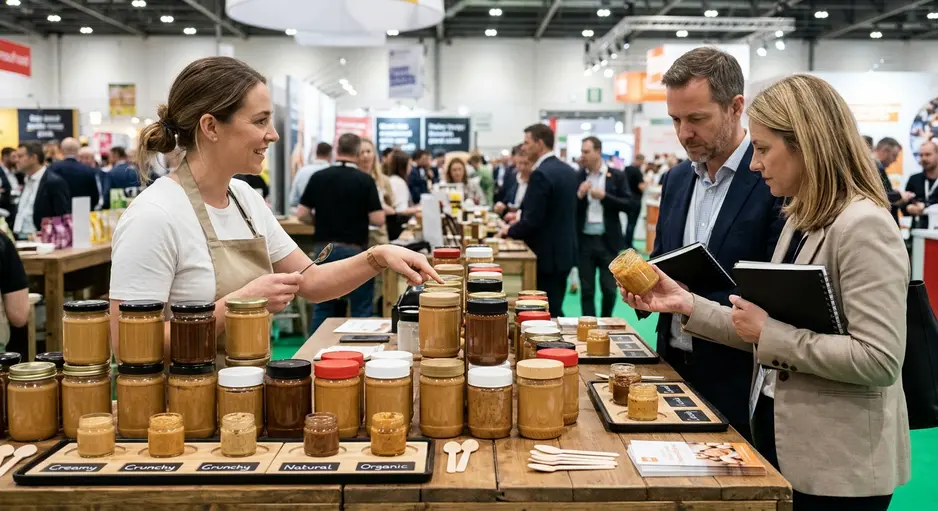
Private label production means a manufacturer makes and packs a product for another company to sell under its own brand. Depending on the project, the buyer may be able to adjust the recipe, texture, flavor, fill weight, label, and outer carton.
Private Label vs. White Label Peanut Butter
The terms are sometimes used in the same way, but there can be a difference. A private label recipe may be customized for one buyer. White label peanut butter often uses an existing formulation that a producer offers to several brands with different labels.
Definitions vary between suppliers. Buyers should confirm whether a formula is exclusive, who owns it, and which changes are possible before approving development work.
Who Uses Private Label Food Manufacturing?
- Supermarkets and retail chains
- Direct-to-consumer food brands
- Fitness and nutrition businesses
- Importers and regional distributors
- Hotels, cafés, bakeries, and caterers
- Institutional and foodservice buyers
Common customization areas include the roast profile, sweetness, salt level, texture, jar size, label, and shipping carton. Minimum order quantities and setup costs usually depend on the level of customization.
How Do You Choose Private Label Peanut Butter Varieties?
To choose private label peanut butter varieties for a new brand, start with the customer rather than the recipe. Consider where they shop, how they use the product, which claims they value, and the price range they expect.
Smooth and Crunchy Peanut Butter
Smooth peanut butter has broad household appeal. It spreads easily and works well in sandwiches, sauces, shakes, and baking. Crunchy peanut butter appeals to people who want visible peanut pieces and a stronger sense of texture.
For smooth and crunchy peanut butter for private label, particle size should be agreed during sampling. Creamy and crunchy texture formulations can range from very fine to coarse. The right choice affects mouthfeel, pumping, filling, and the consumer experience.
Natural and Sweetened Recipes
Natural recipes often have short ingredient lists and a strong roasted-peanut flavor. However, peanut oil may rise to the top during storage. Some brands accept this feature and add a “stir before use” instruction.
Stabilized recipes are designed to limit oil separation and maintain a consistent texture. Sweetened products may appeal to mainstream family markets, while no-added-sugar options can support a simpler positioning. Added sugar and salt levels should match both consumer expectations and local labeling rules.
Jaggery and Chocolate Flavour Variants
Jaggery and chocolate flavour variants can help a brand stand apart from basic products. Jaggery may suit regional or traditional positioning. Chocolate peanut spreads can serve family, snack, and indulgence categories.
Other possible extensions include honey, cinnamon, or high-protein recipes. Any nutrition or ingredient claim must be supported by the final formula and the laws of the destination market.
Roasted Peanut Content and Ingredient Ratios
Roasted peanut content and ingredient ratios influence flavor, cost, nutrition, thickness, and oil separation. A stronger roast can create a deeper taste, but it must remain balanced. Changes to sweeteners, oils, cocoa, salt, or stabilizers can also affect filling performance and shelf stability.
A Practical Three-SKU Launch Plan
- Begin with a smooth, lightly sweetened core product.
- Add a crunchy version for customers who prefer texture.
- Use a natural or chocolate variant to create distinction.
A new brand does not always need a large range. One strong hero product may be easier to market and restock. Small consumer panels can help validate taste before money is committed to printed packaging and bulk peanut butter production.
Which Packaging Option Fits Each Sales Channel?
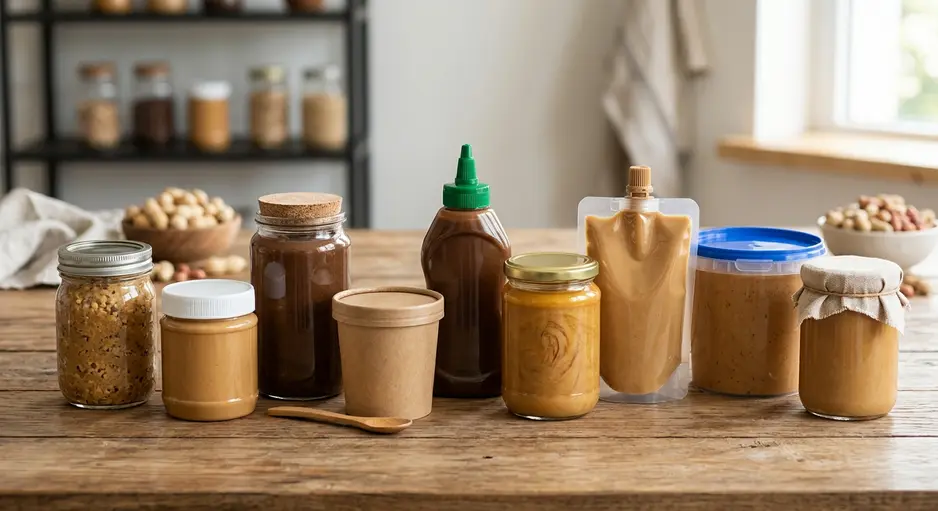
The best private label peanut butter packaging options depend on product thickness, fill temperature, shelf-life goals, transport conditions, and sales channel. Every component should be tested with the final recipe.
Food-Grade PET and Glass Jars
Food-grade PET jars are light, shatter-resistant, and often economical to transport. They are widely suited to mainstream retail and export, provided the material is compatible with the product, filling process, and destination-market food-contact rules.
Glass jars offer a premium appearance and strong barrier performance. They are heavier and can break during handling, so freight costs and carton protection require closer attention. Glass may suit premium or natural ranges where appearance is a key part of the brand.
Wide-Mouth Jars for Easy Dispensing
Wide-mouth jars make thick peanut butter easier to scoop with a spoon or knife. They can also improve access near the base of the pack. The jar neck, cap, liner, and filling equipment must fit together correctly to prevent leaks and sealing faults.
Custom Jar Sizes for Food Brands
Common formats may include trial packs, 200–350 g retail jars, 400–500 g family packs, and 1 kg value packs. Actual availability depends on the packaging vendor and the manufacturer’s filling line.
When selecting custom peanut butter jar sizes for food brands, standard molds often have lower minimum orders than a fully custom container. A unique mold can create shelf impact, but it may require more time, testing, and investment.
Single-Serve Sachets and Portion Packs
Single-serve sachets and portion packs can work for hotels, breakfast programs, catering, gyms, sampling campaigns, and convenience outlets. Their seals must resist oil and pressure during storage and transport.
Buyers should also review easy-open performance, fill accuracy, print quality, and secondary carton protection. Small packs use more packaging per serving, so cost and waste goals should be considered early.
Bulk Peanut Butter in Foodservice Containers
Bakeries, cafés, commercial kitchens, and caterers may prefer wide-mouth tubs or food-grade pails. Bulk peanut butter in foodservice containers should be easy to close again and simple to dispense without contamination.
Handle design, lid strength, stackability, and available storage space also matter. A private label peanut butter supplier should confirm that the pack can withstand normal kitchen use and distribution conditions.
How Do Formulation and Packaging Affect Shelf Life?
A package should protect the product throughout its stated life. Key packaging barrier properties and oil resistance include protection from oxygen, light, moisture, flavor migration, seal leakage, and grease penetration.
Natural recipes may show more oil movement than stabilized products. Packaging alone cannot solve this issue. Peanut grind, formulation, processing conditions, storage temperature, and handling all play a role.
Tamper-Evident Seals and Induction Liners
Tamper-evident seals give shoppers confidence that a pack has not been opened. Induction liners can help prevent leaks and create a secure seal across the jar opening. An external tamper band provides visible evidence around the cap but performs a different function.
The jar, cap, liner, and product need compatibility testing. A liner that works on one container may not seal another material or neck finish correctly.
Shelf-Life Testing and Storage Stability
Shelf-life testing and storage stability checks should cover oxidative rancidity, oil separation, flavor, color, texture, viscosity, seal integrity, and microbiological safety. Testing should reflect the temperatures and handling conditions expected in the supply chain.
A shelf-life date should not be based on the jar alone. It should come from documented testing of the final recipe in the final package.
What Must Appear on the Pack?
Labels and Nutrition Information
Label design and nutritional information panels must follow the rules of the market where the product will be sold. Common elements include:
- An accurate product name
- Net quantity or fill weight
- Nutrition information
- A complete ingredient list
- Storage and usage instructions
- Manufacturer, packer, or importer details
- Country-of-origin details where required
- A barcode and relevant recycling information
Allergen Declaration and Ingredient Listing
Peanuts must be declared clearly according to local allergen rules. Ingredients are commonly listed in descending order by weight. Brands should also assess cross-contact risks involving milk, soy, tree nuts, or other allergens used at the facility.
Claims such as “no added sugar,” “high protein,” or “free from” should not be printed without evidence and a legal review. Claim rules differ between countries.
Batch Coding and Traceability
Batch coding and traceability requirements may include the lot number, production date, best-before date, and links to raw-material records. Codes must remain clear after transport and normal handling.
Strong traceability helps a business investigate complaints and carry out a focused recall if needed. It is a core part of responsible private label food manufacturing.
Packaging for Export Markets
Peanut butter packaging options for export markets must account for language, importer details, nutrition formats, food-contact laws, and registration rules. Carton strength and export pallet configuration should suit stacking, humidity, container movement, and long transit times.
Exporters should also review pallet dimensions, container loading, temperature exposure, and label durability. These checks can reduce damage, leakage, and border delays.
How to Evaluate a Peanut Butter Manufacturer
A capable partner should provide more than an attractive sample. Buyers need evidence that food safety, product consistency, documentation, and packaging controls are built into routine production.
Food Safety and Peanut-Specific Controls
- A HACCP-based food-safety plan
- Relevant certification, such as BRCGS, FSSC 22000, or SQF
- Raw-peanut approval and aflatoxin testing
- Validated roasting and Salmonella controls
- Allergen segregation and cleaning validation
- Metal detection and foreign-body controls
- Environmental monitoring and recall procedures
Production and Customization Capabilities
Ask whether the producer can make smooth, crunchy, natural, sweetened, jaggery, or chocolate recipes. Confirm the availability of trial batches, jar sizes, sachet filling, foodservice packs, custom labels, and branded cartons.
For private label peanut butter with custom labels and branding, check artwork approval steps, print lead times, label application, barcode quality, and responsibility for legal review.
Commercial Questions to Ask
- What are the product and packaging minimum orders?
- Are testing, setup, and artwork charges separate?
- Who owns the formula and approved design?
- What are the sample and production lead times?
- Are specifications, certificates of analysis, and stability reports available?
- Can output grow without changing product quality?
- What happens if a packaging component is delayed?
From Product Brief to Retail Launch
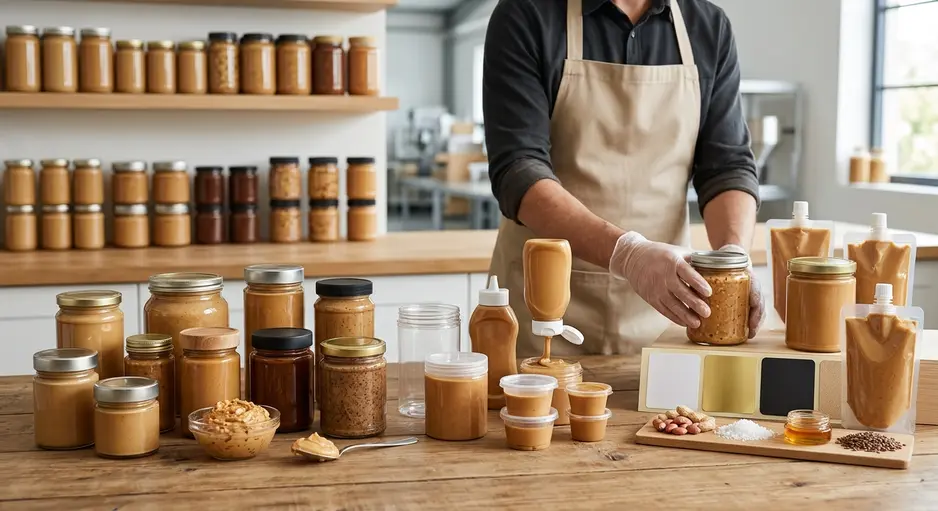
- Define the customer, price level, and sales channel.
- Select one or two priority product varieties.
- Approve ingredients, nutrition goals, and taste benchmarks.
- Choose standard or custom peanut butter packaging.
- Complete samples, label review, shelf-life checks, and transit tests.
- Approve the first production batch before wider distribution.
A supermarket range may use smooth and crunchy recipes in standardized PET jars with secure seals. A premium natural brand may choose glass or high-barrier packaging backed by stability testing. Foodservice buyers may need larger reclosable tubs for quick, hygienic dispensing.
Brands planning private label peanut butter for retail brands, foodservice, or export can contact Nutrionex Foods to discuss formulation goals, pack formats, order quantities, documentation, and destination-market needs. Available capabilities should be confirmed directly before making commercial commitments.
Buy Best Private Label Peanut Butter Products
Build the Range Around the Customer
The right product combines a clear recipe, suitable packaging, compliant labels, and verified food-safety controls. Start with the needs of the customer and sales channel, then test every choice as one complete system.
A focused launch is often stronger than a large first range. Choose a reliable core variety, use packaging that protects it, and confirm shelf life before scaling. With a detailed brief and a carefully assessed manufacturing partner, a brand can move from idea to shelf with fewer delays and better control over quality.
Frequently Asked Questions
1. What is the difference between private label and white label peanut butter?
Private label production may include a recipe or package developed for one buyer. A white-label product often uses a ready-made formula sold under different brand names. The exact meaning varies, so confirm formula ownership, exclusivity, and customization in writing.
2. Can peanut butter be made without added sugar?
Yes, subject to recipe performance and sensory testing. The product may still need work to achieve the desired flavor and texture. “No added sugar” is a regulated claim in many markets and should only be used when the final formulation qualifies.
3. Is glass or PET better for peanut butter packaging?
Neither is always better. PET is light and resistant to breakage, while glass offers a premium look and strong barrier performance. The decision should consider fill conditions, shelf life, freight cost, customer expectations, and export risks.
4. How can natural peanut butter oil separation be controlled?
Oil separation can be managed through peanut selection, grind size, processing, storage conditions, and approved stabilizers where suitable. Consumer stirring instructions may also help. Packaging can limit leakage, but it cannot control separation by itself.
5. What should buyers check before choosing a supplier?
Review certifications, aflatoxin testing, allergen controls, validated processing, traceability, production capacity, documentation, packaging lines, and recall readiness. Buyers should also compare minimum orders, lead times, sample quality, and the supplier’s ability to scale.