Private Label Peanut Butter Manufacturer For HoReCa Businesses
Peanut butter used in a commercial kitchen must do more than taste good. It needs to deliver the same texture, flavor, and yield in every batch. Packaging must also suit fast service, safe storage, and daily kitchen routines.
Choosing a private label peanut butter manufacturer for HoReCa therefore requires a careful review. Hotels, restaurants, cafes, bakeries, caterers, and distributors should assess product specifications, allergen controls, packaging, traceability, lead times, and total cost. This guide explains how to compare suppliers and select foodservice peanut butter that fits your operation.
What Do HoReCa Buyers Need From a Peanut Butter Supplier?
Foodservice-Grade Ingredient Consistency
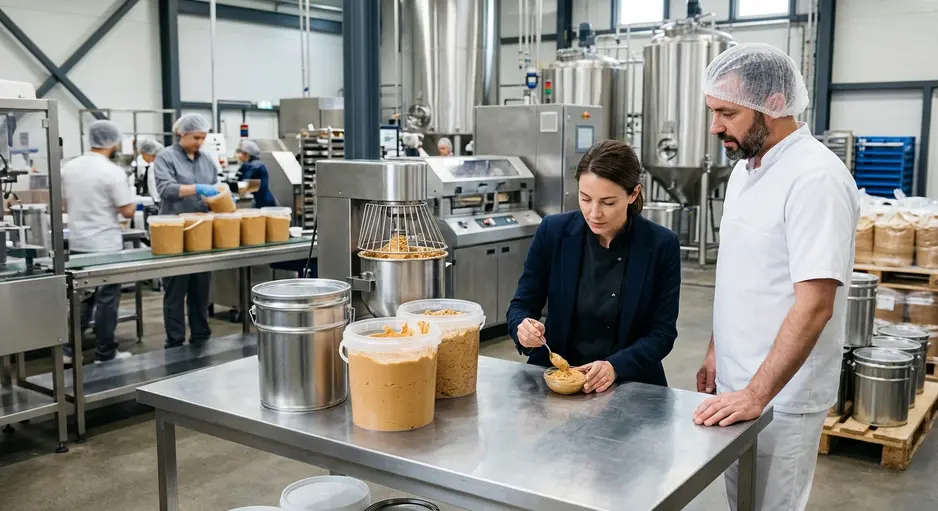
Consistency has a direct effect on kitchen speed and customer experience. Each batch should meet agreed standards for flavor, color, viscosity, grind, and aroma. A product that becomes thicker or oilier from one delivery to the next can disrupt recipes and serving sizes.
Ask your HoReCa peanut butter supplier for a written specification with clear tolerances. This document may cover peanut content, texture, added sugar, salt, oils, stabilizers, and nutritional values. An approved sample can then serve as the reference for future deliveries.
Supply Continuity for Multi-Location Kitchens
Hotel groups and restaurant chains need more than a good initial sample. They need dependable replenishment. Buyers should discuss expected volume, seasonal demand, production lead times, safety stock, and delivery schedules before signing an agreement.
The same specification should reach every location. If orders cross borders, allow extra time for shipping, customs clearance, and destination-market documents. Clear forecasts help suppliers plan production and reduce the risk of shortages.
Which Peanut Butter Format Is Best for Foodservice?
Smooth, Crunchy, Natural, or Stabilized?
Smooth peanut butter works well in sauces, smoothies, breakfast spreads, fillings, and desserts. Crunchy variants add texture to cookies, parfaits, bakery toppings, and dessert bowls. The right choice depends on the menu and kitchen process.
Natural products may suit businesses seeking a simple ingredient list. However, natural oil separation can require mixing before use. Stabilized products may offer more even spreadability at different temperatures and less separation. Buyers should test both options instead of choosing from a specification alone.
Bulk Tubs and Foodservice Pack Formats
Bulk peanut butter for foodservice businesses can be supplied in formats suited to different workflows. Large tubs or pails are useful in production kitchens. Medium packs may be easier to handle at café and bakery stations.
Portion-control cups can support hotel breakfast service, while sachets may suit takeaway meals, room service, and off-site catering. Retail-ready jars can also help hospitality brands sell custom label peanut butter directly to customers. Available formats must always be confirmed with the manufacturer.
When Are Portion Packs Better Than Bulk Tubs?
Portion packs provide controlled serving sizes, tamper evidence, and less shared handling. These benefits can be useful at buffets and catered events. They may also reduce over-serving and make stock counts easier.
However, portion packs often have a higher packaging cost per serving. They also create more packaging waste and need additional storage space. When comparing bulk peanut butter packaging for HoReCa businesses, consider hygiene, waste, labor, and service speed—not only pack price.
How Should Commercial Kitchens Evaluate Product Performance?
Recipe Compatibility for Sauces and Desserts
Foodservice peanut butter should be tested in the recipes where it will be used. A good table spread may not behave the same way in a hot sauce, baked filling, frozen dessert, or smoothie.
Run trials in savory sauces, cookies, brownies, cakes, shakes, breakfast bowls, and dessert toppings as needed. Heat, water, acidity, and other fats can change texture and flavor. Testing shows whether the product blends smoothly and delivers the desired final result.
Spreadability and Kitchen Handling
Test the sample at normal room temperature and at the expected storage temperature. Check how easy it is to scoop, pump, mix, and spread. If oil separation occurs, record how long remixing takes and whether that step affects service.
Refrigeration may make some products harder to handle. Follow the supplier’s storage instructions rather than assuming cold storage is required. The best choice is one that works within your food safety plan and daily workflow.
Peanut Content and Nutritional Specifications
Compare peanut percentage, added sugar, salt, oils, stabilizers, emulsifiers, protein, and fat values. These factors can affect taste, nutrition declarations, product naming, and recipe performance.
Label rules vary by market. The formula and product name should therefore be reviewed against the regulations in the country where the product will be sold or served.
Shelf-Life Stability After Opening
Unopened shelf life and after-opening guidance are not the same. Exposure to air, heat, moisture, and dirty utensils can reduce quality after a container is opened. Kitchens should keep lids closed and use clean, dry tools.
Ask for validated storage and handling requirements. Do not create an internal use-by period without technical support from the supplier.
What Food Safety and Allergen Controls Should Buyers Check?
Allergen Management and Cross-Contact Controls
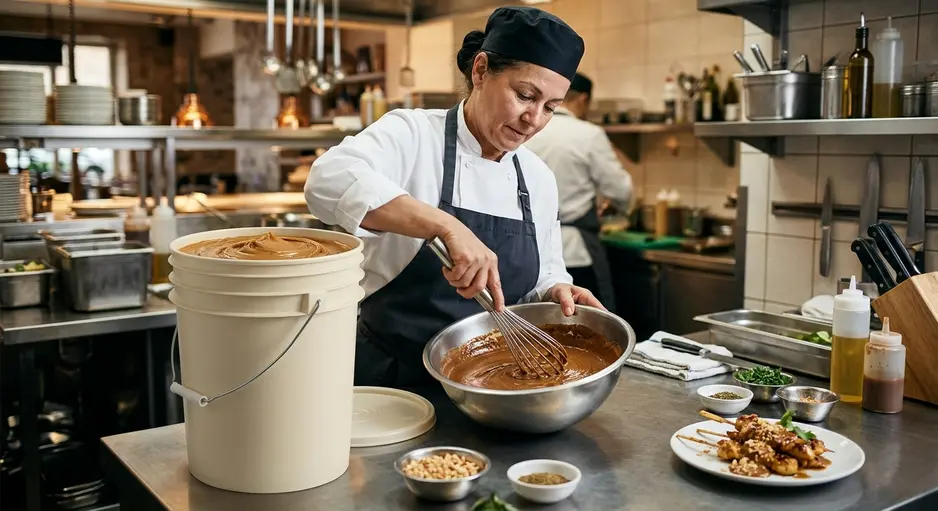
Peanuts are a priority allergen. Buyers should ask how allergens are identified, stored, handled, and declared. Useful controls can include production scheduling, sanitation procedures, documented changeovers, label checks, and staff training.
Cross-contact risks may also involve other nuts, milk, soy, or sesame, depending on the facility and formula. The supplier should provide accurate allergen information. The customer must then continue allergen controls during storage, preparation, and service.
Food Safety Certification and Hygiene Standards
Supplier requirements depend on the buyer and destination market. Procurement teams may ask whether a manufacturer follows HACCP, GMP, ISO 22000, FSSC 22000, BRCGS, SQF, or other relevant programs.
A certification name should never replace a full supplier review. Confirm its scope, validity, production-site coverage, and relevance to the product being purchased. Legal requirements and voluntary certification schemes should also be treated separately.
Batch Traceability and Quality Testing
A reliable system should connect finished product lots with production records and raw materials. Documentation may include lot codes, certificates of analysis, microbiological results, sensory checks, viscosity checks, and packaging records.
Buyers should also review complaint, withdrawal, and recall procedures. Full batch traceability supports a faster response if a quality or safety concern occurs.
How Can a Restaurant Verify Foodservice Safety?
Request written specifications, allergen statements, food safety records, shelf-life information, and traceability details. Review the label and pack condition when goods arrive. Staff should also follow approved storage, utensil, and cross-contact procedures after opening.
How Does Private Label Peanut Butter Manufacturing Work?
From Product Brief to Approved Sample
A private label peanut butter manufacturer needs a clear brief before offering the right solution. A typical development and approval process includes:
- Define the application, volume, target market, and nutritional needs.
- Select a smooth, crunchy, natural, or stabilized product.
- Choose a bulk, jar, sachet, or portion-control format.
- Review samples and complete real kitchen trials.
- Confirm specifications, minimum order quantity, and lead time.
- Approve branding and legally required label content.
- Complete production and agreed quality checks.
- Arrange delivery, stock planning, and replenishment.
Custom Branding and Packaging Compliance
Private label packaging must do more than present a logo. Depending on the target market, required details may include the product name, ingredient list, allergen declaration, net quantity, nutrition information, lot code, date code, and storage instructions.
Manufacturer, packer, distributor, and country-of-origin details may also be required. Final artwork should receive a compliance review before printing. The brand owner remains responsible for checking the rules that apply in each sales market.
Private Label vs. Contract Manufacturing
Private label often uses a supplier’s established formula under the buyer’s brand. Contract peanut butter manufacturing for foodservice brands may involve a more customized formula, texture, nutritional target, or pack specification.
Greater customization can require longer development, higher minimum orders, and more testing. Buyers should decide which features are essential and which can be met by an existing product.
How Do You Choose a Reliable HoReCa Peanut Butter Supplier?
Supplier Evaluation Checklist
Use the same questions for every potential bulk peanut butter supplier so that offers are easier to compare:
- Which product variants and ingredient specifications are available?
- Can the supplier meet the required pack sizes and monthly volume?
- What are the minimum order quantity and production lead time?
- Are samples and technical documents available?
- How are allergens and potential cross-contact risks controlled?
- Which quality checks are completed for each batch?
- Is full lot traceability available?
- Can supply scale as new locations open?
- Which shipping or export documents can be supported?
- How are rejected batches, delays, and complaints handled?
Warning Signs During Selection
Be cautious when a supplier gives vague ingredient information, cannot provide a written specification, or has unclear lot coding. Other warning signs include large batch differences, unsupported shelf-life claims, frequent lead-time changes, and labels that have not received a compliance review.
Quotes should show what is included. Packaging, printing, setup, testing, freight, storage, and taxes can change the final cost. This matters when choosing a peanut butter supplier for hotels and restaurants or a reliable peanut butter supplier for hospitality distributors.
Why Should Samples Be Tested in a Real Kitchen?
A small tasting does not reflect commercial use. Test samples with actual equipment, recipes, storage conditions, utensils, staff workflows, and serving sizes. Monitor the product over several service periods after opening.
This approach is especially important for private label peanut butter for restaurant chains. A controlled trial can reveal slow dispensing, recipe variation, excess waste, or storage issues before a wider launch.
How Can HoReCa Businesses Control Cost per Serving?

Compare Kitchen Yield, Not Only Price per Kilogram
The lowest wholesale peanut butter price may not deliver the lowest operating cost.
Include product left inside the container, over-portioning, remixing time, spoilage, labor, freight, and storage. Portion packs may cost more per unit but can provide better control. A bulk pack may cost less while producing more waste in an operation with low daily use.
Match Packaging to the Operation
- A hotel buffet may use portion cups for hygiene and serving control.
- A bakery producing large batches may gain better yield from bulk tubs.
- A café chain may use bulk packs in the kitchen and branded jars for retail sales.
- A caterer may select sachets for boxed meals and off-site events.
Wholesale peanut butter for bakeries and dessert kitchens should be judged by usable yield and recipe performance. The same principle applies to private label peanut butter for cafes and catering companies.
Start With a Controlled Trial
Test one or two formats at selected locations. Measure portions, waste, preparation time, staff feedback, and customer acceptance. Compare forecast use with actual use, then scale after the specification and cost per serving are approved.
Private Label Peanut Butter Manufacturer for HoReCa Businesses
Choose a Foodservice Partner Based on Total Value
The right private label peanut butter manufacturer for HoReCa should be assessed on consistency, recipe performance, allergen management, packaging, traceability, capacity, and total cost. A clear product brief makes this process faster and more accurate.
Include your expected volume, application, preferred texture, ingredient needs, pack size, target market, and delivery schedule. Hotels, restaurant chains, cafés, bakeries, caterers, and distributors can contact Nutrionex Foods to request verified information about available products, packaging, samples, minimum orders, and private label capabilities.
Frequently Asked Questions About HoReCa Peanut Butter
1. What Is Foodservice Peanut Butter?
It is peanut butter supplied in specifications and pack formats designed for commercial kitchens, hospitality businesses, or institutional catering. It may prioritize consistent texture, predictable yield, efficient handling, and foodservice packaging.
2. What Is the Best Peanut Butter Packaging for Hotels?
Breakfast buffets and room service may benefit from sealed portions. Hotel bakeries and central kitchens may prefer bulk tubs. The best format depends on usage, service style, storage space, hygiene needs, and waste levels.
3. Can Cafes Order Private Label Peanut Butter?
Private label availability depends on the manufacturer’s minimum order quantity, product range, packaging options, and label requirements. Cafés should provide expected volume and intended use when requesting information.
4. Is Bulk Peanut Butter Cheaper Than Sachets?
Bulk packs usually have a lower packaging cost per kilogram. However, buyers should also measure labor, waste, hygiene, over-portioning, and disposal. The lowest unit price may not produce the best kitchen yield.
5. How Long Does Peanut Butter Last After Opening?
It depends on the formula, packaging, storage conditions, and handling. Follow the supplier’s validated after-opening and storage guidance. Keep the container closed and use clean, dry utensils.