Private Label Peanut Butter For Food Brands: Quality & Custom Packaging
Launching a peanut butter brand does not require building your own processing plant. With private label peanut butter, an experienced third party produces and packs the product under your brand. Depending on the agreement, you may select an existing recipe or develop a custom formula.
Yet a successful product depends on more than flavour. Peanut quality, texture, food safety, shelf life, labeling, packaging, and batch consistency all affect its retail performance. This guide explains how to evaluate production options, refine a formula, select packaging, and prepare your product for domestic or export markets.
Why Food Brands Choose Private Label Production
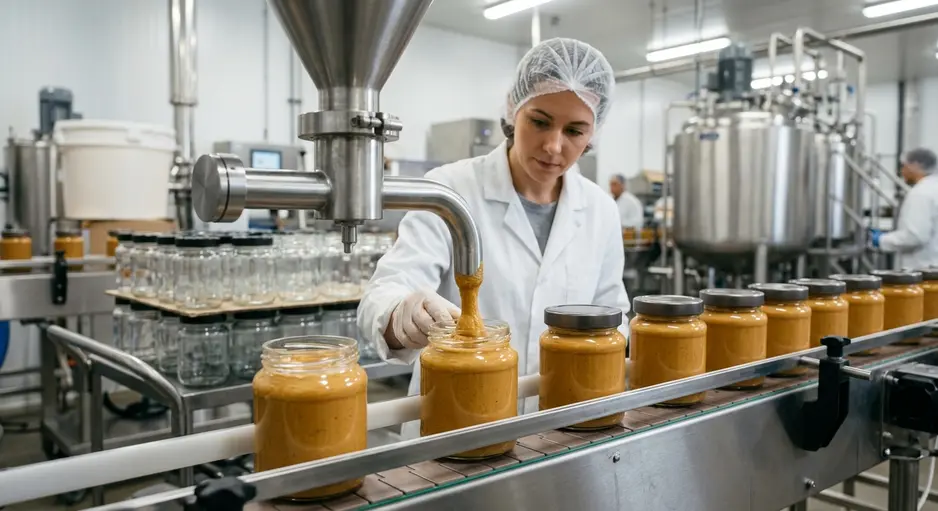
Private label food products give brands access to established equipment and production knowledge. This can reduce capital costs and shorten the route from an initial idea to a retail-ready jar.
Private Label vs. White Label vs. Contract Manufacturing
- White label peanut butter: A standard product that may be sold by several businesses under different brand names.
- Private label peanut butter: A base product sold under one brand, often with choices for texture, ingredients, jar size, and label design.
- Peanut butter contract manufacturing: Production based on a customer-owned or jointly developed specification.
The right model depends on how much control the brand needs. White label products can be quicker to launch. A custom program offers more differentiation but may require trials, special ingredients, and larger orders.
Benefits for New and Established Brands
Private label peanut butter for startups can lower the need for equipment, technical staff, and factory space. Established businesses can use the same model to add new flavours, sizes, or foodservice products.
However, it may not suit very small test volumes or recipes that need dedicated machinery. Brands should also consider labels, testing, freight, cartons, and storage. These expenses can affect launch costs as much as the product itself.
What Determines Peanut Butter Quality?
Roasted Peanut Sourcing and Quality Grading
Product quality starts with the raw peanuts. Ask a potential supplier about peanut variety, origin, approved vendors, grading procedures, and roasting controls. Roasting should create the desired colour and flavour without causing burnt notes or uneven results.
Controls should cover foreign material and risks such as aflatoxins. Testing requirements can vary by destination market, so the specification should state which limits and methods apply. Supplier approval records and certificates of analysis can support, but not replace, the manufacturer’s own controls.
Smooth and Crunchy Texture Options
Smooth and crunchy texture options require measurable standards. For a smooth product, particle size affects mouthfeel. For a crunchy version, brands should define the size and distribution of peanut pieces. These details help limit changes between batches.
Texture must also remain acceptable during storage. A sample may taste ideal when fresh but become firm, oily, or dry after several months. Production trials provide more useful evidence than a small kitchen sample alone.
Protein and Nutritional Profile
Peanut variety and recipe choices affect the protein and nutritional profile. Added sugar, salt, oils, cocoa, and other ingredients can change calories, fat, sodium, and protein per serving.
Nutrition information should be supported by a suitable calculation or laboratory analysis where required. Claims such as “high protein,” “reduced sodium,” or “no added sugar” must meet the rules in the market where the product will be sold.
Microbiological Testing and Quality Assurance
Peanut butter is a low-moisture food, but this does not remove pathogen risk. A sound plan may include checks on incoming materials, hygiene monitoring, finished-product testing, documented release procedures, and retained samples.
How Is a Custom Peanut Butter Formula Developed?
Sugar, Salt, Oils, and Stabilisers
Custom peanut butter production starts with a clear product brief. The brand must decide whether the product will be unsweetened, lightly sweetened, or made for a more indulgent taste. Added sugar and salt formulation affects flavour, viscosity, nutrition values, and label claims.
The brand must also decide how to manage oil separation. Natural peanut butter may separate during storage and need stirring. Stabilised products are designed to keep a more uniform texture.
Palm oil and stabiliser selection should consider function, ingredient positioning, sourcing goals, and destination-market rules. Palm-free alternatives may be possible, but each option must be tested for texture and stability rather than selected on marketing value alone.
Flavours and Dietary Positioning
Possible variations include cocoa, honey, cinnamon, peanut pieces, sweetener blends, or fortified recipes. Organic and non-GMO positioning should only be used when certification, sourcing records, and traceability support the claim.
From Bench Sample to Commercial Batch
- Define the target customer, flavour, texture, ingredients, and price position.
- Create a bench or pilot sample.
- Review colour, taste, spreadability, and oil separation.
- Confirm ingredient availability and expected costs.
- Run a commercial-scale production trial.
- Approve a written formula and finished-product specification.
A physical “gold standard” sample can help the development team, but it should be paired with measurable limits. The written specification may cover colour, viscosity, particle size, salt level, fill weight, and sensory standards.
What Is the Manufacturing and Quality-Control Process?
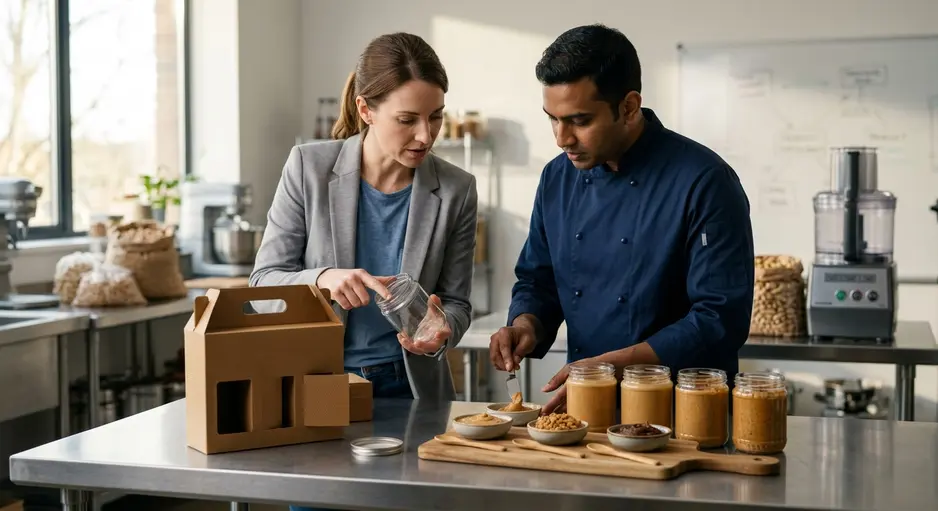
Typical Production Steps
The exact private label peanut butter manufacturing and packaging process varies by facility and recipe. A general process may include:
- Receiving and inspecting approved peanuts
- Cleaning, sorting, and foreign-material control
- Roasting and cooling
- Blanching when required
- Grinding the peanuts
- Blending the remaining ingredients
- Adjusting texture and particle size
- Applying metal detection or other controls
- Filling, sealing, labeling, and coding
- Case packing, quality release, and dispatch
Food Safety Management Systems
Buyers should review the manufacturer’s food safety management systems rather than relying on one certificate. Important areas include Good Manufacturing Practices, allergen controls, sanitation, supplier approval, preventive controls, and corrective-action records.
Depending on the product and market, relevant documentation may include HACCP and standards such as BRCGS, SQF, FSSC 22000, or ISO 22000. Certification can show that a system has been audited, but ongoing records reveal how it works in practice.
Traceability and Shelf-Life Testing
Batch coding and traceability systems should connect raw-material lots with production records and finished jars. Ask whether the facility conducts mock recalls, keeps retained samples, and has a written complaint investigation process.
Shelf-life validation and stability testing should examine rancidity, flavour, colour, oil separation, texture, seal integrity, and microbiological suitability. Storage temperature and light exposure matter as well. A natural recipe that performs well in the laboratory may separate during a long, warm shipment.
Which Custom Peanut Butter Packaging Is Best?
Jars and Food-Grade Materials
Custom peanut butter packaging for food brands should protect the product while fitting the target price and sales channel. PET jars and food-grade packaging materials are widely considered because they are light, shatter-resistant, and efficient to transport.
Glass can create a premium appearance, but it is heavier and more likely to break. Foodservice tubs or pails may suit bakeries, restaurants, and institutional users. Single-serve packs offer convenience, although they can involve more complex equipment and higher packaging costs.
Each packaging component should have documented food-contact suitability for its intended use.
Seals, Liners, and Closures
Tamper-evident seals and induction liners can protect the opening and provide visible evidence of interference. Pressure-sensitive liners and tamper-evident bands are other options, depending on the jar and closure.
The chosen peanut butter packaging solutions should undergo leak, torque, seal, and transport testing. The jar, liner, and cap must work together; selecting each item separately without compatibility tests can lead to failed seals.
Retail and Foodservice Sizes
Packaging sizes for retail and foodservice may include trial jars, standard retail packs, family sizes, and bulk containers. Final options depend on filling-line capability, customer demand, freight efficiency, and retailer requirements.
Labels and Brand Identity
Private label peanut butter with custom jars and labels gives a product a distinct shelf presence. Label artwork and brand identity requirements should be addressed early because the available label area affects both design and regulatory content.
A compliant label may need the product name, net quantity, nutrition information, ingredient declaration and allergen warnings, responsible business details, barcode, lot code, and country-of-origin information. Requirements differ across markets, so the final artwork should receive a suitable regulatory review.
Cartons and Pallets
Export carton specifications and palletisation influence product protection and shipping costs. Brands should define units per case, carton strength, pallet pattern, maximum height, stretch wrapping, and shipping marks. Testing is especially useful when jars will face vibration, stacking pressure, heat, or long transit periods.
How Do You Choose a Private Label Manufacturer?
Manufacturer Evaluation Checklist
When learning how to choose a private label peanut butter manufacturer, compare documented capabilities instead of relying on a sales presentation. Ask about:
- Peanut sourcing, approval, and testing procedures
- Available recipes and texture controls
- Pilot trials and commercial production capacity
- Food safety audits and allergen management
- Packaging formats and filling-line limits
- Testing and batch-release procedures
- Lead times and changeover planning
- Formula ownership and confidentiality
- Recall plans and product-liability procedures
- Domestic and export documentation support
Minimum Order Quantities
There is no universal minimum order quantity for private label peanut butter. It can depend on batch size, formula complexity, ingredient purchasing, jar availability, closure quantities, label runs, and carton specifications.
Ask for separate minimums for the product, jar, lid, liner, label, and carton. A production run may appear manageable while the custom closure or printed packaging requires a much larger purchase.
Questions to Ask Before Signing
- Who owns the approved recipe and artwork?
- Can an ingredient be changed without written approval?
- Which quality tolerances apply to each batch?
- Who reviews the label for regulatory compliance?
- What happens when a batch fails its specification?
- How are price changes, forecasts, and lead times handled?
Warning Signs
Red flags include vague testing answers, missing allergen controls, weak batch records, and shelf-life claims without supporting data. Be cautious of unusually low quotes that do not define ingredients, packaging, testing, freight, or service terms.
Can Startups and Export Brands Use Private Label Production?
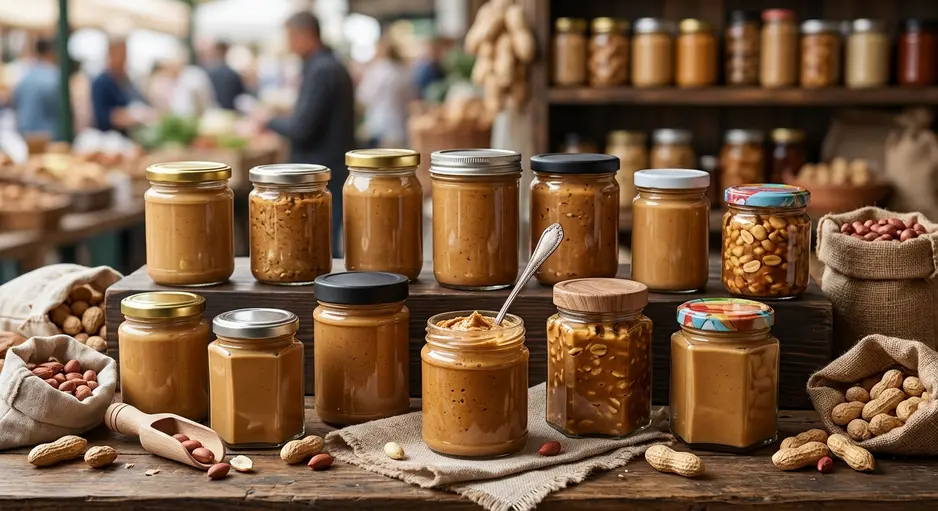
A Practical Startup Plan
Startups can reduce risk by launching one formula in one jar size. Pressure-sensitive labels may offer more flexibility than complex printed packs during an early market test. Feedback should cover taste, spreadability, texture, and visible oil separation—not just the label design.
Once repeat demand is clear, the brand can consider more sizes or flavours. This staged approach helps avoid tying up funds in slow-moving ingredients and packaging.
Planning Bulk Production
For bulk peanut butter production for retail brands, capacity is only one concern. Buyers should also assess seasonal demand, forecast deadlines, safety stock, multi-product changeovers, retailer case packs, and business continuity plans.
Export Support
A private label peanut butter supplier with export capabilities should understand destination-market ingredient and labeling rules. Support may include certificates of analysis, origin or health documents where required, shipping records, suitable cartons, and coordinated pallet plans.
Export brands must also account for transit time, climate, carton strength, and remaining shelf life on arrival. These needs should appear in the product and packaging specifications before the first order.
Private Label Peanut Butter for Food Brands
Build a Product Brief Before Requesting a Quote
The right private label peanut butter manufacturer should align formulation, safety, packaging, scale, and service. Before making contact, prepare a brief that covers your target customer, preferred texture, ingredients, jar size, order volume, sales market, certification needs, and desired launch timing.
Contact Nutrionex Foods to discuss your peanut butter concept, custom formulation requirements, packaging preferences, expected order volume, and domestic or export market needs. Request written confirmation of the available options, documentation, minimum quantities, and production terms for your project.
Frequently Asked Questions
1. What is private label peanut butter?
It is peanut butter produced by a third-party manufacturer and sold under the buyer’s brand. Depending on the program, the buyer may customise the recipe, texture, jar, label, closure, carton, and case pack.
2. How long does custom production take?
Timing depends on formula development, sample approval, ingredient supply, packaging procurement, production scheduling, testing, and shipping. A custom project usually has more stages than a ready-made white label product.
3. Can a manufacturer make smooth and crunchy versions?
Often, yes, subject to its equipment and production limits. The specification should define particle size, crunch-piece distribution, texture, and acceptable batch variation.
4. Can I order natural peanut butter without palm oil?
A palm-free formula may be possible. However, a natural product may show visible oil separation and require stirring instructions. Stability trials can show how it performs during storage and transport.
5. What packaging can be customised?
Options may include jar material, size, cap, liner, tamper-evident feature, label, carton, case pack, and pallet configuration. Actual choices depend on the manufacturer’s equipment and packaging supply chain.