Peanut Butter Supply For HoReCa: Trends & Opportunities In 2026
Peanut butter now plays a much wider role than a simple breakfast spread. Hotels use it at buffets, cafes blend it into smoothies, and bakeries add it to cookies, pastries, and fillings. It also works well in sauces, desserts, snacks, and grab-and-go products.
For HoReCa buyers, the challenge is finding a product that balances taste, nutrition, cost, food safety, and daily kitchen performance. This guide explores the main 2026 trends, product formats, applications, packaging choices, and purchasing risks shaping peanut butter supply for the foodservice industry.
Why Peanut Butter Matters to HoReCa in 2026
A versatile commercial kitchen ingredient
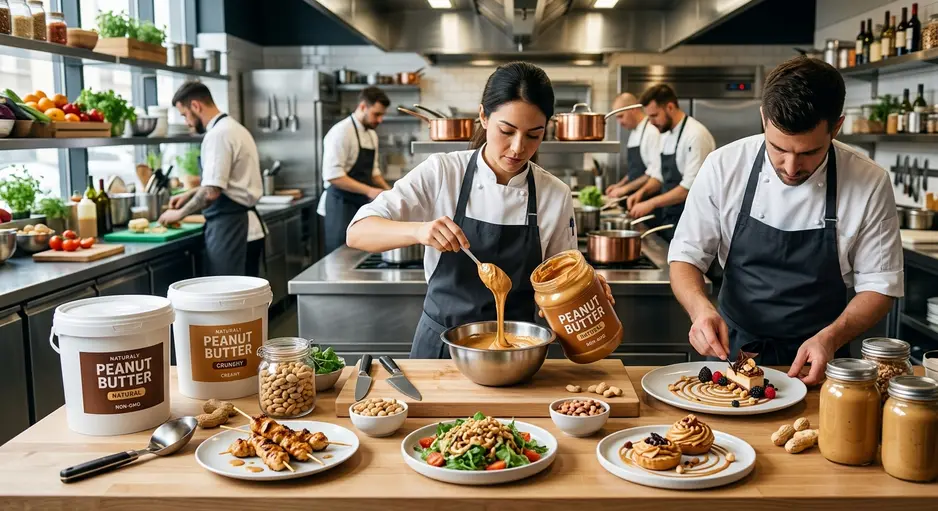
Few commercial kitchen ingredients can move so easily between breakfast, bakery, beverage, dessert, snack, and savory menus. One product may support toast, smoothies, cookies, sauces, fillings, and energy bites. This cross-use can reduce the number of ingredients a kitchen must store.
Consistency matters, especially for hotel groups and restaurant chains. Changes in viscosity, sweetness, roast level, or oil separation can affect recipes and portion costs. Multi-location operators should use a clear product specification so each kitchen receives the same flavor and texture.
Nutrition, familiarity, and menu flexibility
Peanut butter nutritional value varies by recipe and serving size. It commonly provides protein, fat, energy, and selected micronutrients. However, buyers should review verified nutrition data before making menu claims. A product should only be described as “high protein” when it meets the legal definition in the target market.
A hotel, for example, might use the same foodservice peanut butter for breakfast toast, smoothie stations, dessert sauces, and energy bites. Each use still needs clear allergen information, trained staff, dedicated utensils, and suitable separation procedures.
Peanut Butter Trends Shaping Foodservice Demand
Natural and no-added-sugar options
Shorter ingredient lists are gaining attention as guests look for simpler foods. Natural peanut butter may appeal to this demand, while no added sugar peanut butter can support menus that aim to limit added sweeteners. “No added sugar” is not the same as “sugar-free,” so labels and menu wording must be accurate.
Simple formulations may create operational trade-offs. Some products separate and need stirring before use. They may also behave differently in pumps, sauces, or bakery recipes. Kitchens should test handling time and waste before making a switch.
Premium products move onto menus
Premium peanut butter should be defined by clear features rather than vague claims. Buyers can assess peanut origin or variety, roast profile, ingredient simplicity, smoothness, particle size, flavor options, and documented quality controls.
A premium format may work well in plated desserts, specialty toast, signature shakes, or gift products. A dependable conventional product may remain more suitable for high-volume recipes where cost and stable performance come first.
Protein-forward and functional positioning
Protein-focused breakfasts, smoothies, and snacks will remain part of peanut butter trends 2026. Operators may also see demand for preservative-free peanut butter and simple-label recipes. All nutrition claims should be supported by current laboratory data and local regulations.
Texture as a menu tool
Creamy peanut butter offers a uniform texture for smoothies, sauces, spreads, fillings, and batters. Crunchy peanut butter adds visible pieces and a stronger bite to cookies, parfaits, toppings, and premium desserts.
Efficient packaging
Foodservice operators are also looking at product residue, container weight, stackability, and freight use. Environmental claims should only be made when evidence is available. In practice, a pack that reduces waste and improves storage may offer both operational and material benefits.
Where Foodservice Peanut Butter Creates Value
Hotel breakfast menus
Single-serve cups or sachets can improve portion control and presentation at buffets or through room service. Jars and tubs are useful for controlled back-of-house preparation. Common pairings include toast, oats, pancakes, fruit, and smoothies.
Peanut butter for hotel breakfast menus must be managed as an allergen-containing food. Clear signage, protected presentation, dedicated serving tools, and trained staff help reduce avoidable contact and guest confusion.
Cafes and bakeries
Peanut butter for cafes and bakeries can appear in shakes, iced drinks, toast, brownies, cookies, croissants, and filled pastries. Cafes often care about easy dispensing and smooth blending. Bakeries may place more weight on heat performance, moisture, and batch consistency.
Viscosity, sweetness, salt, and roast strength can change the final recipe. A highly roasted product may stand out in a cold drink but overwhelm a delicate pastry. Sample testing helps teams select a balanced option.
Bakery production
Peanut butter for bakery applications should be tested for spread, bake stability, oil migration, and texture after cooling. Particle size can affect deposits and fillings, while moisture and fat movement may influence shelf quality. Production trials are essential before changing a formula or supplier.
Desserts and savory dishes
Peanut butter for desserts includes cheesecake, mousse, ice cream, confectionery, and toppings. It can also be used in suitable dressings, marinades, and satay-style sauces. Menu descriptions should clearly disclose peanuts.
A cafe might use a creamy commercial peanut butter for a standard smoothie, then finish a higher-priced dessert with a crunchy version. This lets the operator serve different price points without making the menu difficult to manage.
Which Peanut Butter Format Is Best for HoReCa?

Creamy vs. crunchy
Best uses: Creamy formats suit smoothies, sauces, spreads, and fillings. Crunchy formats work well in cookies, toppings, desserts, and texture-led snacks.
Consistency: Creamy products are more uniform. Crunchy products contain peanut pieces whose size and distribution may vary by specification.
Dispensing: Smooth products are often easier to portion through suitable equipment. Peanut pieces may make crunchy products unsuitable for some pumps.
Testing: Check viscosity and separation for creamy products. For crunchy products, assess particle size, distribution, and recipe performance.
Natural vs. conventional products
Natural products often have simpler ingredient lists but may show more oil separation. Conventional commercial peanut butter may use stabilizing ingredients to improve texture and ease of handling. Buyers should compare sweetness, salt, separation, storage instructions, and expected shelf life.
Standard vs. customized formulations
Standard products are often the practical choice for predictable recipes and cost control. A private label peanut butter supplier may be asked about roast, texture, sweetness, salt, packaging, or label customization. Custom projects can require larger minimum orders and longer development or approval periods.
Bulk Packaging, Shelf Life, and Kitchen Efficiency
Common packaging formats
Available peanut butter packaging sizes vary by producer and market. Buyers may encounter single-serve cups or sachets, retail-style jars, medium tubs or pails, and larger industrial containers. Exact options should always be confirmed with the manufacturer or sales team.
- Single portions suit buffets, room service, and packed meals.
- Jars support controlled service and lower-volume preparation.
- Tubs or pails can suit cafes, restaurants, and busy kitchens.
- Industrial packs may serve bakeries and central production sites.
How does packaging affect food cost?
The lowest unit price may not deliver the lowest total cost. When comparing bulk peanut butter, consider residue, portion control, handling time, hygiene, damage, storage space, and freight efficiency. A container that is easier to empty may offer better value than a cheaper but wasteful pack.
Shelf life and storage
Peanut butter shelf life depends on the formulation, processing method, packaging, storage, and handling after opening. There is no reliable universal figure. Follow the product’s storage and best-before instructions, and use first-expired, first-out stock rotation.
Once opened, containers should be protected from moisture and contaminated utensils. Foodservice packaging solutions should also be reviewed for tamper evidence, resealability, pallet configuration, and compatibility with dispensing systems.
How to Choose a Peanut Butter Supplier for HoReCa
Evaluate the specification before the price
A practical peanut butter procurement guide starts with a written specification. This makes supplier comparisons clearer and reduces the risk of choosing a product that performs poorly in the kitchen.
- Ingredient and allergen declarations
- Texture, viscosity, and particle size
- Roast and flavor profile
- Sugar, salt, and stabilizer levels
- Verified nutrition information
- Microbiological specifications
- Pack format, net weight, and storage needs
- Documented shelf life and batch consistency
Verify food safety systems
Ask each potential peanut butter supplier for HoReCa about HACCP-based controls, good manufacturing practices, allergen management, traceability, recall procedures, testing, and certificates of analysis. Third-party certifications and regulatory documents should be checked rather than assumed.
Assess supply reliability
Review production lead times, order minimums, forecasting needs, sample procedures, order flexibility, pallet use, and contingency plans. Buyers should also understand how complaints are investigated and how quickly replacement stock or corrective information can be provided.
Manufacturer, exporter, or distributor?
A peanut butter manufacturer for hotels and restaurants may provide closer control over specifications and customization. A peanut butter exporter for global markets should be able to discuss shipping documents, destination labels, product registration, and shelf life on arrival. A local distributor may offer smaller orders and faster delivery.
Questions for private-label projects
- Which parts of the formulation can be customized?
- Who owns the approved recipe and label artwork?
- What are the development timeline and minimum order quantity?
- Which packaging formats can be used?
- Can destination-market labels be supported?
- Are stability and shelf-life records available?
Contact Nutrionex Foods to discuss verified product specifications, available packaging, samples, order volumes, private-label requirements, and export-market needs.
Peanut Butter Procurement Guide for 2026

Calculate the total cost of ownership
Compare delivered cost, yield, portion cost, residue, labor, storage, freight, customs, and the possible cost of a supply interruption. This approach gives buyers a clearer picture than price per kilogram alone.
Test under real operating conditions
- Shortlist suppliers using documented specifications.
- Request samples from representative production batches.
- Test flavor, texture, separation, dispensing, and yield.
- Run bakery, beverage, or sauce trials where relevant.
- Gather feedback from chefs, buyers, and service staff.
- Review safety, labeling, and export documents.
- Complete a limited pilot before signing a long agreement.
Build supply resilience
Forecast seasonal demand, set reorder points, and define safety stock based on lead time. Do not accept formulation changes without new recipe trials. Approved backup products can also reduce risk during freight or production delays.
Peanut Butter Supply for HoReCa
Prepare Your HoReCa Supply Strategy
Peanut butter can support profitable menu ideas when buyers choose the right formulation, texture, pack size, and supply partner. The strongest purchasing decisions consider recipe performance, food safety, waste, total cost, and reliable delivery.
Opportunities in 2026 are likely to favor suppliers that can respond to demand for natural and premium products, efficient foodservice packs, private labels, and export support. Contact Nutrionex Foods to confirm current products, packaging formats, samples, customization options, and export information for your market.
Frequently Asked Questions About Foodservice Peanut Butter
1. What type is best for restaurants?
The best choice depends on the dish. Smooth products suit sauces, smoothies, and fillings, while crunchy products add texture to desserts and toppings. Restaurants should also compare allergen controls, consistency, packaging, shelf life, and cost per serving.
2. How should hotels serve it safely?
Hotels should use clear allergen identification, dedicated utensils, protected buffet presentation, and trained staff. Single portions can support hygiene and portion control. Local food-safety and allergen rules must always be followed.
3. Is it suitable for bakery production?
Yes, but bakeries should test viscosity, oil migration, bake stability, sweetness, particle size, and finished texture. A successful bench sample should be followed by a production-scale trial.
4. Can natural peanut butter be purchased in bulk?
It may be available in bulk packaging, depending on supplier capabilities. Ask about oil separation, storage, order minimums, pack formats, and dispensing performance before buying.