Organic Vs Natural Peanut Butter: Key Differences Explained
Peanut butter labels can be confusing. One jar says organic, another says natural, and a third promises a no-stir texture. You may also see products called peanut spread rather than peanut butter.
The main difference is simple: organic describes a regulated production system, while natural is a broad labeling term. Neither claim tells you everything about nutrition or ingredients. This guide explains how the products compare in sourcing, processing, taste, texture, storage, and value.
Organic vs Natural Peanut Butter: Quick Answer
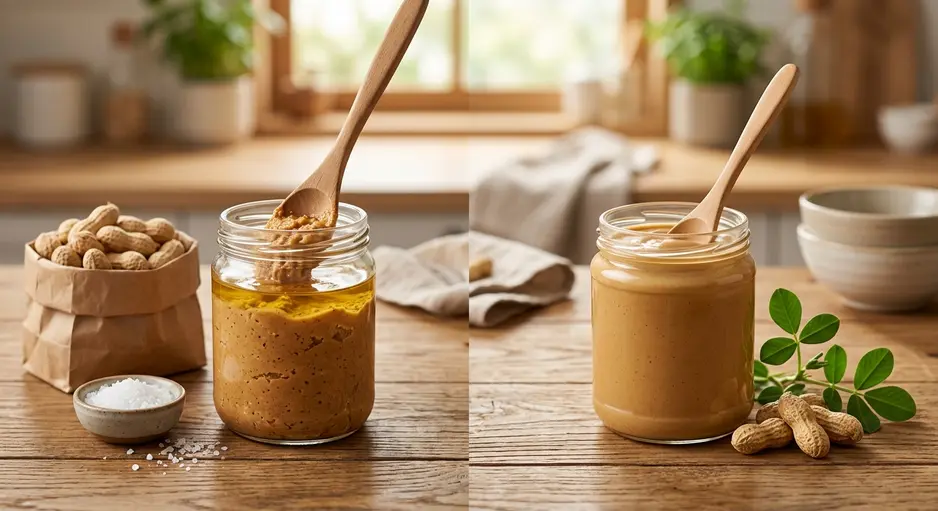
Organic peanut butter uses peanuts and other agricultural ingredients that meet certified organic standards. Natural peanut butter often emphasizes simple ingredients, but “natural” does not guarantee organic farming, no added sugar, or no stabilizing oils. A product can be organic, natural, both, or neither.
Main meaning
Organic: Refers to regulated farming, handling, and certification standards.
Natural: Usually describes a product’s ingredients, processing, or market position. It does not have a dedicated certification system.
Peanut source
Organic: Uses certified organic peanuts when the finished product carries an organic claim.
Natural: May use organic or conventionally grown peanuts.
Added ingredients
Both types may contain added sugar, salt, or oil. Oil separation depends on the formulation, not just the words on the front of the jar. Organic options often cost more because certification, ingredient sourcing, and recordkeeping add costs.
What Do “Organic” and “Natural” Mean?
What certified organic peanuts mean
In the United States, certified organic products must follow the USDA organic labeling rules. These rules cover how agricultural ingredients are grown, processed, handled, and documented.
Organic standards prohibit genetic engineering. They also restrict most synthetic pesticides and fertilizers and prohibit irradiation and sewage sludge. Farms and food handlers must maintain records and complete inspections under the National Organic Program.
Label wording matters. A product labeled “100% organic” must meet stricter ingredient requirements. A product labeled “organic” generally needs at least 95% certified organic ingredients, excluding salt and water. “Made with organic ingredients” is a separate claim with different requirements.
Certification addresses production and handling practices. It does not mean a food is automatically low in calories, sugar, sodium, or saturated fat.
What the natural label guarantees
The FDA does not have a formal definition that addresses every way companies use the term natural. Its longstanding policy on natural food labeling generally means that nothing artificial or synthetic has been added that would not normally be expected in that food.
However, a natural label does not automatically mean that a product is pesticide-free, sugar-free, salt-free, or minimally processed. It also does not guarantee that it contains no palm oil or other stabilizers.
This is why ingredient transparency matters more than front-label wording. Turn the jar around and check the full ingredient list before making a choice.
Can peanut butter be both natural and organic?
Yes. A product made from certified organic roasted peanuts and sea salt may satisfy organic requirements while meeting common expectations for natural peanut butter.
A peanuts-only product made with conventional crops may be natural-style but not organic. Meanwhile, a jar containing organic peanuts, organic cane sugar, and organic palm oil may qualify as organic without being a one-ingredient product.
Ingredients and Processing Differences
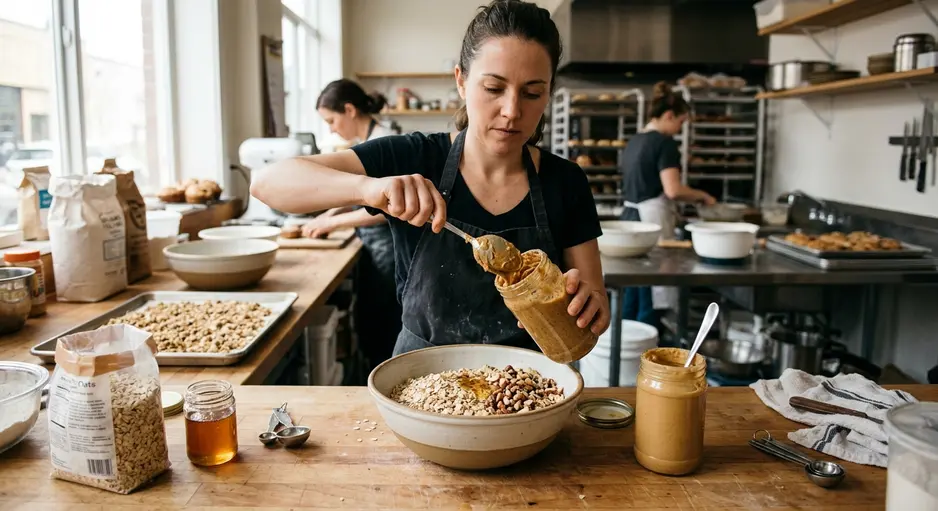
Typical organic peanut butter ingredients
Organic peanut butter ingredients vary between products. Common examples include:
- Certified organic roasted peanuts
- Organic peanut oil
- Organic cane sugar
- Salt
- Organic palm oil or another permitted stabilizer
If you want organic peanut butter without additives, look for a list containing only peanuts. A peanuts-and-salt version is also simple, though it contains added sodium.
Typical natural peanut butter ingredients
Natural peanut butter ingredients can be just as varied. Some jars contain roasted peanuts only, while others include salt, sugar, palm oil, or another stabilizer.
The word natural alone does not promise a no-sugar or no-oil recipe. Check the Nutrition Facts panel for added sugar and sodium. Then review the ingredient list to identify added salt, sweeteners, and oils.
Peanut paste, peanut butter, and peanut spread
Peanut paste is ground peanut material used as a base ingredient. Its texture can range from coarse to very smooth, depending on the food processing methods used.
Under the FDA’s standard of identity for peanut butter, a product sold as peanut butter must contain at least 90% peanuts. A formulation that falls outside this standard may be sold as an organic peanut spread or natural peanut spread.
“Spread” does not automatically mean better or worse. Compare the percentage of peanuts, ingredient list, nutrition panel, and intended use.
Hydrogenated oils and clean-label products
Manufacturers may use stabilizing oils to improve texture and stop peanut oil separation. This creates a smooth, no-stir product that stays consistent during storage.
Partially hydrogenated oils are different from fully hydrogenated oils or blended stabilizers. Also, “no hydrogenated oils” does not mean no oil has been added. A product may use palm oil or another non-hydrogenated option.
A clean label formulation usually means a short, familiar ingredient list. Yet “clean label” is a consumer and industry phrase, not a regulated nutrition standard. Products should still be judged on their full formulation.
Is Organic Peanut Butter Healthier Than Natural?
Organic vs natural peanut butter nutrition
When two products have similar recipes, their calories, protein content, and total fat are often close. The more meaningful differences may come from sweeteners, sodium, serving size, and stabilizing oils.
For a fair comparison, use the same serving size and review:
- Calories
- Protein and fiber
- Total and saturated fat
- Added sugar
- Sodium
Peanuts provide protein and mostly unsaturated fats. However, the healthy fats in peanuts are calorie-dense, so portion size still matters. Palm oil may raise saturated fat while providing a more stable texture.
Organic peanut butter benefits
Possible organic peanut butter benefits include certified sourcing, traceability, required recordkeeping, and compliance with established certification standards. It may appeal to shoppers who support organic farming practices.
Many organic products also have short ingredient lists, but this is not guaranteed. Certification does not prove that a jar contains more protein or fewer calories than a similar conventional product.
Natural peanut butter benefits
Potential natural peanut butter benefits include a strong roasted-peanut flavor and access to simple, peanuts-only recipes. Some products contain no added sugar, stabilizers, or artificial preservatives.
These advantages depend on the label, not the natural claim. A conventional peanuts-only jar can have a simpler recipe than an organic product containing sugar, salt, and added oil.
Organic vs conventional peanut butter
The main distinction between organic and conventional peanut butter is how the ingredients are produced and certified. It is not necessarily a major nutritional difference.
If organic agriculture matters to you, certification may justify the higher cost. If your priority is nutrition, focus first on added sugar, sodium, saturated fat, and portion size. The overall diet matters more than one label claim.
Why Does Natural Peanut Butter Separate?
Peanut oil separation explained
Peanuts release their own oil when they are ground. In a jar without stabilizers, the oil slowly rises while the peanut solids settle. This is normal and does not, by itself, show that the food is spoiled or poor quality.
Roast level, grind size, temperature, and processing can affect how quickly separation occurs. Natural vs processed peanut butter is not an all-or-nothing comparison, since every peanut butter is roasted, ground, or otherwise processed.
How to stir and store it
- Keep the unopened jar upright.
- Use a sturdy spoon or long knife to reach the bottom.
- Mix the oil into the compacted peanut solids.
- Continue stirring until the texture is even.
- Follow the package directions for storage after opening.
Refrigeration can slow separation and help maintain freshness, but it also creates a firmer texture. A no-stir product may be more convenient for breakfast, while a minimally stabilized product may suit shoppers who prefer fewer ingredients.
How to Choose the Best Peanut Butter
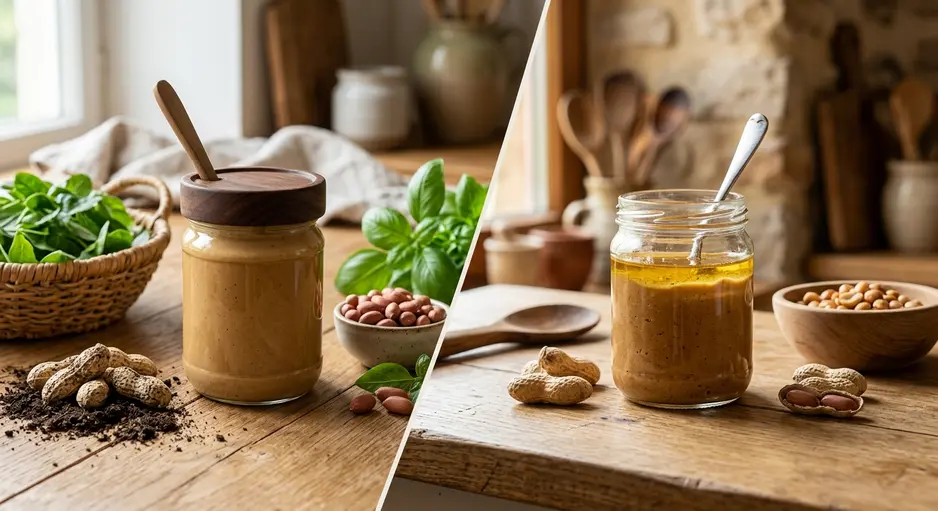
Use this peanut butter buying guide to look past marketing claims and find the right product for your needs.
Follow a five-step label checklist
- Read the ingredients first. Look for peanuts as the first ingredient. For the shortest list, choose peanuts only or peanuts and salt.
- Check added sugar. Review the ingredients and the Added Sugars line on the Nutrition Facts panel.
- Compare sodium. Choose an unsalted version if you need to limit sodium.
- Review added oils. Decide whether easy spreading or a no-added-oil recipe matters more.
- Verify certification and allergens. Look for the USDA Organic seal when certified sourcing is important.
Peanuts are a major food allergen. Always review allergen information and any cross-contact statements, especially when buying for a family, school, restaurant, or food-service operation.
Best options for common priorities
- For organic sourcing: Choose a certified product and verify its seal.
- For a short ingredient list: Select a peanuts-only variety.
- For healthy eating: Compare added sugar, sodium, saturated fat, and serving size.
- For breakfast convenience: Consider a smooth no-stir product with little or no added sugar.
- For lower sodium: Pick unsalted natural peanut butter.
- For predictable texture: Choose a stabilized butter or spread.
Questions for manufacturers and suppliers
Commercial buyers need more than front-label claims. Ask the manufacturer or exporter:
- What percentage of the formulation is peanuts?
- Are the peanuts certified organic?
- Are sugar, salt, or stabilizing oils added?
- What allergen and cross-contact controls are used?
- Can you provide a specification sheet and certificate of analysis?
- What are the recommended storage conditions and shelf life?
Buyers considering products from Nutrionex Foods should request current ingredient, packaging, sourcing, and certification details directly before making a purchasing decision.
Explore Organic & Natural Peanut Butter
Final Takeaway
In the organic vs natural peanut butter debate, neither word alone identifies the best jar. Organic refers to certified production and handling standards. Natural is a broader term that does not guarantee organic crops, simple ingredients, or better nutrition.
Choose based on verified certification, ingredient transparency, added sugar, sodium, oils, allergen controls, texture, and budget. The best option is the one whose label and sourcing standards match your needs—not the one with the most impressive front-of-pack claim.
Organic vs Natural Peanut Butter FAQs
1. Is natural peanut butter always organic?
No. It may contain conventionally grown peanuts. If certified sourcing is important, look for a valid organic statement and certification seal rather than relying on the word natural.
2. Is organic peanut butter healthier than regular peanut butter?
Not automatically. Products with similar ingredients often have comparable calories, protein, and fat. Added sugar, sodium, oils, serving size, and the rest of your diet are often more relevant to nutrition.
3. Can organic peanut butter contain sugar or oil?
Yes. It may contain certified organic sugar, palm oil, peanut oil, or other permitted ingredients. Read the label if you want organic peanut butter without additives.
4. Does natural peanut butter need refrigeration?
It depends on the product. Refrigeration may slow separation and maintain freshness, but it can make spreading harder. Always follow the storage instructions on the jar.
5. Which peanut butter has the least processing?
A product made only from roasted peanuts is among the simplest choices. Still, roasting and grinding are forms of processing, so calling peanut butter completely unprocessed would not be accurate.