Crunchy Peanut Butter Manufacturer & Supplier In Germany
Crunchy peanut butter has moved beyond the breakfast table. German retailers, bakeries, foodservice operators, snack brands, and private-label businesses use it in many products. Buyers value its roasted flavour, rich texture, and flexible applications.
Yet taste is only one part of supplier selection. Procurement teams must also examine food safety, allergen control, packaging, product consistency, documentation, and delivery terms. This guide explains how to assess a crunchy peanut butter manufacturer for German buyers and prepare for bulk or private-label sourcing.
It is also important to distinguish between a crunchy peanut butter manufacturer in Germany, a local distributor, and an overseas manufacturer supplying the German market. Each option involves different commercial, logistical, and compliance duties.
Why Is Crunchy Peanut Butter Popular with German Buyers?
Texture and sensory appeal
Crunchy peanut butter combines a creamy peanut base with crushed peanut pieces. This contrast gives each bite more texture than a fully smooth spread. The roast level, peanut-piece size, aroma, and viscosity all shape the final experience.
German buyers may prefer a light roast for a mild taste or a deeper roast for a stronger aroma. Particle size also matters. Fine pieces create a gentle crunch, while larger pieces provide a more noticeable nut spread texture.
Retail and manufacturing applications
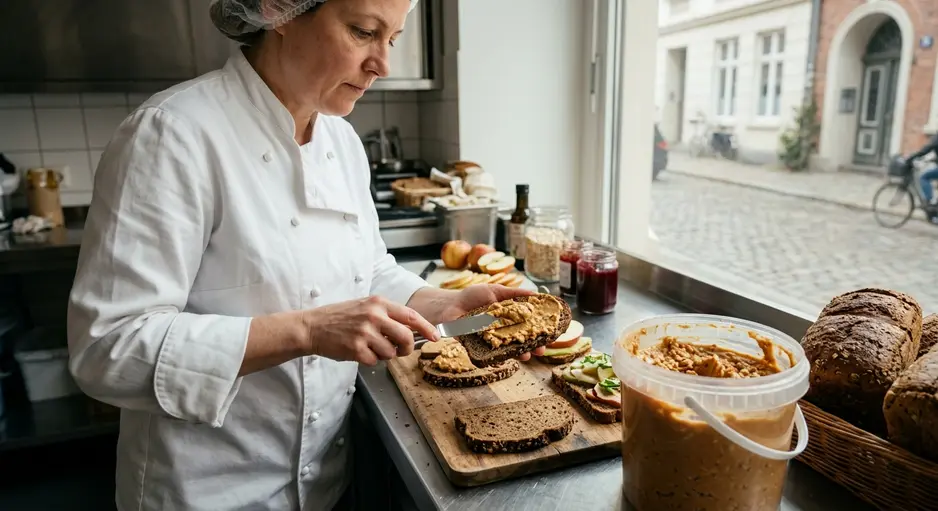
The product can be sold in retail jars or used as a food ingredient. Common applications include:
- Bakery fillings, cookies, and desserts
- Protein bars and snack products
- Smoothies and breakfast bowls
- Sauces, dressings, and savoury recipes
- Foodservice tubs for cafes and restaurants
- Industrial bulk food ingredients
Clean-label formulation choices
Demand often includes natural peanut butter, palm-oil-free options, no-added-sugar recipes, and low-sodium formulations. Vegan positioning may also be relevant when the recipe and production controls support it.
Peanuts provide protein and fat, which can make peanut butter a protein-rich spread. However, brands should avoid broad health claims. Nutrition and health statements used in Germany must meet the relevant EU conditions.
What Defines Premium Crunchy Peanut Butter?
Peanut quality and roast consistency
Good crunchy peanut butter starts with suitable peanuts. Kernel grade, origin, raw-material storage, and roasting conditions affect colour, aroma, and flavour. A consistent roast is especially important for brands that need the same sensory profile in every batch.
Buyers should ask how the manufacturer controls foreign material, damaged kernels, storage conditions, and lot traceability. Roasted peanuts should have a balanced flavour without burnt or stale notes.
A creamy base with controlled crunch
“Crunchy” is not one fixed specification. A buyer can define the percentage of crushed peanut pieces, desired particle range, roast level, viscosity, and smooth-to-crunch ratio. These details help a manufacturer create repeatable samples.
Oil separation is another key point. Natural products may separate because peanut oil rises over time. This is not always a quality defect. Stabilised formulations can reduce separation, but they use a different ingredient approach. Buyers should decide what is suitable for their target market.
Ingredients and nutrition profile
Possible recipes range from 100% peanuts to products made with salt, sugar, oils, or stabilisers. A no-added-sugar product may still contain naturally occurring sugars from peanuts. It does not automatically qualify as sugar-free.
A useful product brief should answer these questions:
- Peanut content: What percentage of the recipe is peanuts?
- Crunch size: Can the peanut-piece range be customised?
- Added ingredients: Are salt, sugar, oils, or stabilisers included?
- Oil separation: Is the recipe natural or stabilised?
- Testing: Which chemical and microbiological checks are completed?
- Shelf life: What evidence supports the declared period?
How Do You Choose a Peanut Butter Manufacturer?
Review food-grade processing
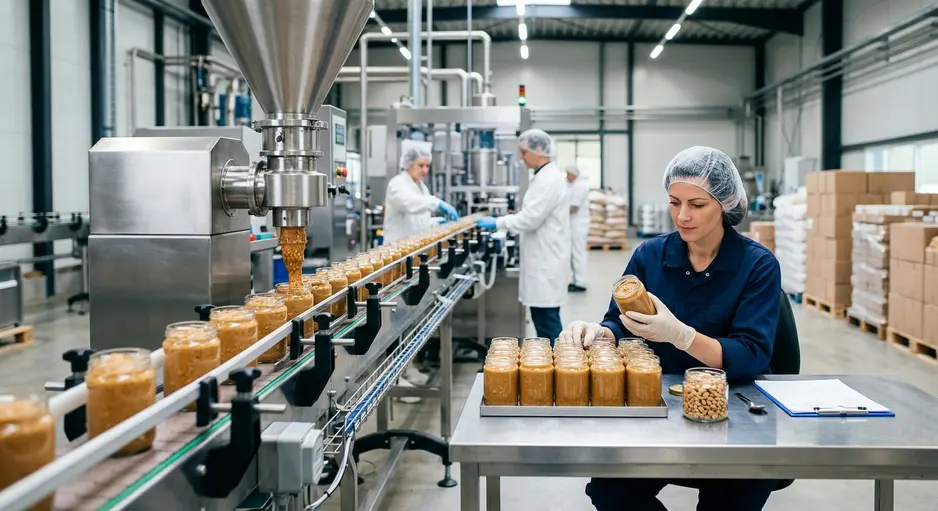
A suitable peanut butter manufacturer should be assessed through documents and direct questions. Buyers should review HACCP-based controls, good manufacturing practices, cleaning procedures, pest management, preventive maintenance, and calibration systems.
Foreign-body controls may include sieves, magnets, metal detection, or other suitable measures. The exact system can vary, but the supplier should explain how hazards are identified, monitored, and recorded.
Examine allergen control
Peanuts are a mandatory declared allergen in the EU. Effective allergen control should cover ingredient handling, production scheduling, cleaning, label approval, storage, and cross-contact risks.
Ask whether the facility uses dedicated or shared lines. If lines are shared, request details about cleaning validation and risk assessment. Supplier allergen declarations should also cover other allergens that may be handled at the facility.
Request evidence, not broad assurances
A reliable assessment is based on current evidence. Before approving a peanut butter supplier, request documents relevant to the planned product and market:
- Product and ingredient specification
- Certificate of analysis for an agreed batch
- Allergen declaration
- Applicable food-safety certificates
- Contaminant and microbiological reports
- Packaging specifications
- Shelf-life or stability evidence
- Traceability and recall procedures
Use a supplier scorecard
A simple scorecard can improve supplier comparisons. One model gives 30% to food safety, 20% to product consistency, 15% to regulatory support, 15% to capacity and lead time, 10% to packaging, and 10% to communication and commercial terms.
What Standards Apply to Peanut Butter Sold in Germany?
Aflatoxin and contaminant controls
Peanuts can be affected by aflatoxins. Risk management may include approved raw-material sources, suitable storage, representative sampling, lot testing, and work with competent laboratories.
Products placed on the EU market must meet applicable contaminant requirements, including Regulation (EU) 2023/915. Importers should verify the correct product category and current legal limits. They should also check the latest version of Regulation (EU) 2019/1793 to see whether increased import controls apply.
Microbiological food safety
Salmonella control is an important part of peanut-product safety. Supplier reviews should cover process hygiene, sanitation, environmental monitoring where appropriate, batch-release rules, and corrective actions.
Legal duties and buyer specifications are not always the same. A retailer may set tighter internal standards or request extra testing. These requirements should be agreed before sample approval and commercial production.
German and EU food labels
A retail label may need the legal product name, ingredient list, emphasised allergen information, net quantity, nutrition declaration, best-before date, storage guidance, and lot identification. It must also identify the responsible food business operator in the EU.
Mandatory consumer information should be available in German for products sold to German consumers. Regulation (EU) No 1169/2011 provides the main EU framework for food information and allergen labelling. Final artwork should be checked by a qualified specialist before printing.
Packaging and traceability
Packaging must be suitable for food contact. Buyers may need declarations supporting compliance with applicable food-contact rules, including Regulation (EC) No 1935/2004 and good manufacturing practice requirements.
German packaging duties also require attention. The parties should confirm who first places the packaged goods on the German market and who handles registration and recycling obligations under VerpackG. Batch codes must support practical traceability through the supply chain.
Can Suppliers Provide Bulk and Private-Label Peanut Butter?
Bulk crunchy peanut butter supply
Bulk formats may include foodservice tubs, pails, drums, or other buyer-approved containers. When comparing options for a bulk crunchy peanut butter supplier Germany search, confirm fill weight, container material, pallet pattern, storage needs, and transport durability.
The supplier should also confirm whether the product can maintain its texture during shipping and storage. A trial shipment can help identify oil separation, leakage, seal failure, or changes in viscosity.
Private-label development
A typical private label crunchy peanut butter Germany project follows a clear process:
- The buyer submits a recipe and texture brief.
- The manufacturer reviews technical feasibility.
- Samples are prepared and tested.
- The buyer approves flavour, texture, and appearance.
- Packaging and artwork receive compliance review.
- A pilot or first production batch is completed.
- The commercial batch is released after agreed checks.
Private label packaging may include glass or plastic jars, tamper-evident seals, barcodes, date codes, cartons, and German-language labels. Every packaging component should be confirmed in the written specification.
MOQ, capacity, and lead times
Minimum order quantities depend on the recipe, jar size, packaging material, label method, and production plan. Buyers should request the MOQ for each format rather than relying on a single general figure.
Other questions should cover annual capacity, peak-season limits, sample fees, packaging tooling, first-order lead time, repeat-order lead time, and contingency plans for delayed raw materials.
How Can German Buyers Source Peanut Butter from India?

A practical import workflow
Companies assessing a crunchy peanut butter exporter from India to Germany can use this seven-step process:
- Define the recipe, texture, pack size, and expected volume.
- Pre-qualify the manufacturer and production system.
- Review food-safety, allergen, and traceability records.
- Approve representative, laboratory-tested samples.
- Check German and EU label compliance.
- Agree on Incoterms, documents, insurance, and delivery duties.
- Complete pre-shipment and arrival checks.
Documents to confirm
Depending on the shipment and current rules, documents may include a commercial invoice, packing list, certificate of origin, bill of lading, product specification, and certificate of analysis. Health, official-control, or food-contact documents may also be needed.
Requirements can change based on product classification, origin, and updated EU controls. Importers should confirm the current position with their customs and food-compliance advisers before dispatch.
This level of detail helps the producer assess feasibility and prepare useful samples. It can also reduce reformulation, packaging errors, and shipment delays.
Discussing a project with Nutrionex Foods
German buyers evaluating export or private-label opportunities can contact Nutrionex Foods directly. Before making a sourcing decision, request current details about product specifications, manufacturing location, available packaging, minimum orders, testing, certifications, lead times, and export support.
This direct verification is essential when comparing a crunchy peanut butter supplier for Germany. It prevents assumptions about factory location, production capacity, or approvals and gives both parties a clear basis for a quotation.
Crunchy Peanut Butter Manufacturer & Supplier in Germany
Choose a Supplier with Evidence and Clear Specifications
Finding the right crunchy peanut butter supplier in Germany or an overseas partner serving Germany requires more than tasting a sample. Buyers must examine processing controls, allergen management, test records, packaging, traceability, label compliance, and delivery planning.
Looking for bulk or private-label crunchy peanut butter for the German market? Contact Nutrionex Foods to discuss your formulation, packaging format, expected volume, testing requirements, delivery destination, and current commercial options.
Frequently Asked Questions
1. What is the difference between crunchy and creamy peanut butter?
Creamy peanut butter has a more uniform texture. Crunchy versions add crushed peanut pieces to the smooth base. The amount and size of these pieces determine how mild or strong the crunch feels.
2. Is natural crunchy peanut butter suitable for private labelling?
Yes, when a producer can support the requested recipe, order volume, packaging, and shelf-life validation. Natural products may show oil separation, so the label and product instructions should reflect the approved formulation.
3. Can German companies import crunchy peanut butter from India?
Importing is possible when the product meets applicable EU and German rules for food safety, contaminants, labelling, traceability, customs, and official controls. Requirements should be checked for each shipment and product classification.
4. How should aflatoxins be controlled?
Controls may include supplier approval, suitable peanut storage, representative sampling, laboratory testing, batch release, and full traceability. Results must comply with the applicable EU limits for the correct product category.
5. What is the shelf life of crunchy peanut butter?
There is no universal period. Shelf life depends on the recipe, processing method, oxygen exposure, packaging, storage, and oil stability. Buyers should request validated data for the exact formulation and pack.